
What It Takes to Build Something of Your Own: A Conversation with Faiza Ahmed
Ontario-based broker and PropertyMesh founder Faiza Ahmed reflects on learning unfamiliar skills, earning trust and the less visible work of building a business.
“I do not think being the founder means pretending to know every part of the business,” says Faiza Ahmed. “It means knowing where your judgement is useful and where you need to listen.”
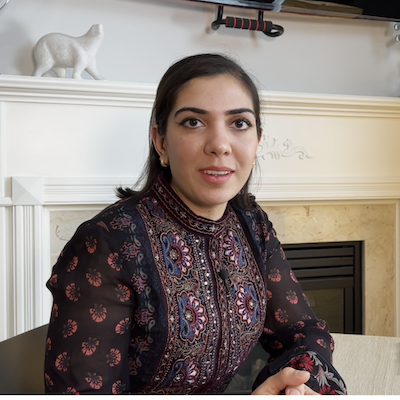
Based in Ontario, Canada, Faiza Ahmed is a real estate broker and the founder of PropertyMesh, which she established in 2024. In written responses approved for this feature, she reflects on building a property platform alongside her professional work, collaborating with specialists and learning to judge what needs attention.
Her starting point was not technology. It was something she had encountered repeatedly through her work in real estate: people can have access to an enormous amount of information and still be uncertain about what that information means for the decision they are trying to make.
From information to understanding
“I thought I knew what real estate was in the beginning. You think it’s about homes and transactions. But very quickly, you realise it’s about people making heavy decisions. And that changes how you interact and assist.”
That understanding developed gradually rather than through one particular transaction.
“It wasn’t a single dramatic moment. It was repetition. You sit with enough people who are unsure or afraid, and you learn to help them through the process, so they can make those decisions.”
The experience also changed the way Faiza thought about information.
“Someone can look through a large number of properties and still feel unsure about what matters, what needs checking or what to expect from the professional helping them,” she explains.
She wanted PropertyMesh to bring searching, understanding and professional support closer together. That included making the service itself easier to understand: what someone was paying for, what was included and which questions they should feel comfortable asking.
“I was not setting out to suggest that everything about real estate needed replacing. I wanted to build on the work I was already doing and make parts of the experience clearer.”
Translating that intention into something practical required more detailed questions. Who was the platform helping? What were they trying to find out? Which parts of the experience needed a conversation rather than another page?
Then there was the work that continued after the website was launched.
Faiza says one of the lessons of building something of her own was discovering how different creating a product can be from actually establishing it.
“It’s exciting but humbling. You imagine you build something and people just use it. In reality, building is the easy part. Getting in front of the right people, adjusting when something doesn’t land, and focusing on a product that’s actually useful. That’s the work. And a lot of that work is invisible.”
Information also needed checking and updating. Services changed. Pages needed revisiting. Someone had to take responsibility when something no longer reflected what was actually being offered.
“I began to see that launching a website was not the finish line. It created an ongoing responsibility.”

Becoming a beginner again
Technology brought a particular challenge: explaining professional knowledge to people working in a different discipline.
“In client work, you can hear that someone has misunderstood something and explain it differently,” she says. “A website cannot rely on you being beside the person using it.”
The task was to identify where a person might get stuck and explain what needed to happen next. A request to make something “easier” was too broad to be useful on its own.
That required Faiza to become more precise about the outcome she wanted, while recognising that she did not need to know every technical step required to achieve it.
“My professional experience can help define the problem, while someone with specialist skills can help work through the solution.”
For her, responsibility includes knowing what she can decide herself, what needs specialist input and when an idea needs to be reconsidered.
Deciding what can wait
As the platform developed, Faiza also became more cautious about adding something simply because it was possible.
“It is easy to see a new idea and immediately imagine a place for it,” she says. “But every addition asks something of the person using the platform.”
An extra feature might mean another choice, another explanation or another screen. The question became whether it would help the person using it enough to justify that additional demand.
“Would it answer a question? Would it make information easier to understand? Would it save them a step? If the answer is unclear, the idea probably needs more thought.”
She has become more comfortable returning to existing work. A clearer explanation or a better-organised page may deserve attention before a new feature does.
“There is plenty I would like to develop. I am learning to be more selective about what deserves attention first.”
It is a modest description of progress, measured partly by what she chooses to improve rather than simply by how much she can add.
What happens after the conversation
For Faiza, the responsibilities behind the platform remain closely connected to what she has learned from working with clients.
“Sometimes the most responsible thing to do is hold back. Not add pressure, not fill every silence. Let people have space. That can be harder than talking.”
Knowing when to explain something and when to give somebody room to consider it can be as important as having an immediate answer.
“There can be pressure to sound certain, especially when someone is looking to you for guidance,” she says. “But I would rather explain what I know, what I still need to check and why the distinction matters.”
She draws a distinction between confirmed information, estimates and interpretation. Making those differences clear matters, as does explaining the limits of a service before assumptions become expectations.
Her questions about trust are practical.
“Did you follow up? Did you check the point you said you would check? Did you explain when something changed?”

Asked what she is proud of that would not be obvious from the website, she returns to the checking behind the pages. Is the information current? Does an explanation go further than the evidence supports?
“Those decisions matter to me because a page can look finished before the information is ready.”
She is clear that this remains work in progress. She wants that attention built into the way the business operates, rather than depending on someone remembering to check.
“Good intentions are important, but there also needs to be a clear process and someone responsible for following through.”
Much of this work, she points out, will never be visible to the person using the website.
“There’s the part you see, and then there’s the part you don’t. The thinking, the restraint, the reworking. And that’s okay. Not everything valuable is visible.”
Making room for the unfinished story
On the subject of women in business, Faiza is wary of reducing the experience to a polished founder story.
“I don’t think about it in slogans. I think about it in stamina. Staying steady, doing the work, not needing to be the loudest voice in the room. Over time, that steadiness speaks.”
She sees value in hearing from women while they are still developing their businesses, rather than only once there is a finished success story to present.
There is ordinary work behind the description of a founder: making decisions, asking for help, learning something unfamiliar, changing direction when necessary and taking responsibility when something needs improving.
Professional experience in one area can also sit alongside uncertainty in another.
“You can have something valuable to contribute without already knowing how to do everything the business will eventually require.”
Her advice to a woman considering an idea follows the same practical approach. Begin with the problem. Identify who experiences it. Ask how they currently deal with it. Understand the problem before becoming too attached to a particular solution.
The next step should provide an opportunity to learn without requiring someone to commit immediately to the largest possible version of the idea.
“You do not necessarily need to commit to the complete version of the business straight away. You need a way to find out whether your assumptions make sense.”
There is a caution alongside the encouragement.
“And be realistic about the time and resources you have available,” she adds. “Advice to ‘just go for it’ can overlook the responsibilities someone is already carrying.”
Building something of your own, in Faiza’s account, is not a single leap from an idea to a finished business. It is a sequence of decisions, tests, corrections and responsibilities, many of which take place where nobody else can see them.
For Faiza, the question she would put to another woman is therefore one she can continue asking herself:
“What can you do next that will give you a clearer understanding?”
Poppy Watt