
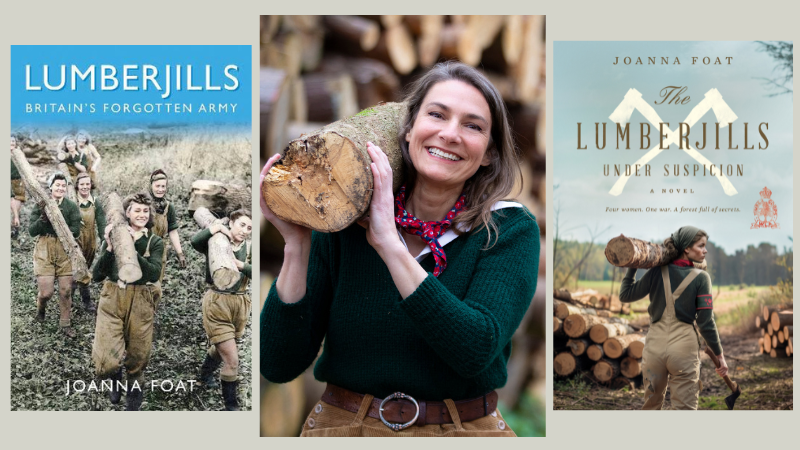
The Women Behind the Lumberjills: Joanna Foat on the Forgotten Women of Britain’s Wartime Forests.
When we think about the women who played a vital role during the Second World War, we often think of the women who worked in factories, served as nurses, drove ambulances or took on jobs traditionally carried out by men.
But what about the women who went into Britain’s forests and woods, picking up axes and crosscut saws and doing some of the hardest physical work of the war?
Known as the Lumberjills, between 15,000 and 18,000 women worked as part of the Women’s Timber Corps, helping to ensure Britain had the timber it desperately needed during wartime. Their contribution was enormous, yet for decades their story remained largely forgotten.
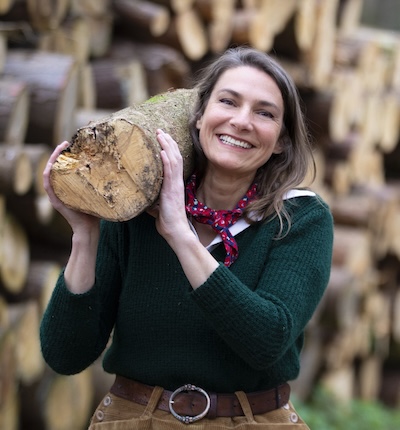
Author and historian Joanna Foat has spent years uncovering their experiences, travelling around the country to meet more than 60 of the original Lumberjills and recording their memories.
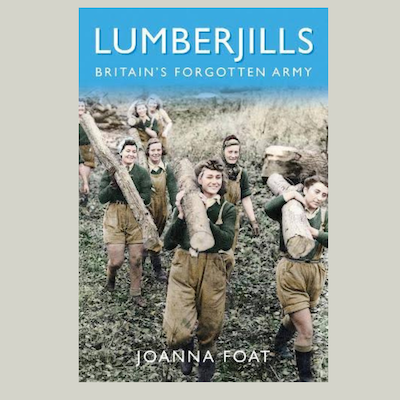
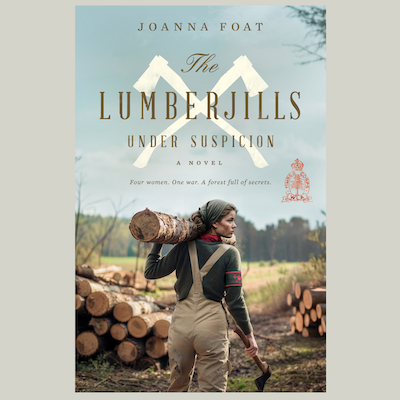
Her research first became the basis for the history book Lumberjills: Britain’s Forgotten Army. She has since drawn on those real-life experiences to create a series of novels, including her latest book, The Lumberjills Under Suspicion.
We previously reviewed the novel here at Women Talking, but Joanna’s answers to our questions about the book and her research revealed so much about the remarkable women behind the story that we felt they deserved to stand alone.
So, we went back to Joanna to find out more about the women who inspired her, the prejudice they faced and how their extraordinary experiences became the foundation for her fiction.
Women Talking to Joanna Foat
The Lumberjills played such a vital role during the Second World War, yet their story remains largely unknown. What first inspired you to dedicate so much of your career to uncovering their remarkable history, and what surprised you most during your research?
I was working as a communications consultant for the Forestry Commission in 2012 when I first heard of the Lumberjills. I was surprised that thousands of women had felled trees with axes and crosscut saws in wartime, yet I had never heard of them.
Even my colleagues had never heard of them. I visited the National Archives and discovered that all the Women’s Timber Corps records had been destroyed except for one sample folder. There was only one small website dedicated to a few Scottish Lumberjills and I had only found a few references in history books.
As a child I loved climbing trees and as a young woman my dad bought me an axe for Christmas because I loved chopping wood for the fire. So, I thought, had I been born 50 years earlier, perhaps I would have been a Lumberjill. So, I decided to travel the country to meet over 60 of the original Lumberjills. Their stories were incredible and yet they all told me they felt so upset that they had been forgotten at the end of the war. I wanted to give these women a voice.
The story was a perfect mix of everything I love. Women working in jobs traditionally held by men, breaking through prejudices, proving they were strong enough to do the job. Triumph against adversity. This was not just the rare few exceptional women; this was 15-18,000 women across the country and it felt like an incredibly important story to tell.
The prejudice against the women surprised me the most during my research. I was shocked to read the newspaper headline ‘Forestry Handicap.’ Other articles reported there would be, ‘nothing but chaos resulting’ and that the women were more ‘ornamental rather than useful’. When I spoke to the women, they told me they were laughed at, ridiculed, refused billets and hotel rooms and paid significantly less for doing exactly the same jobs as the men.
Your novels blend meticulous historical research with compelling fiction. How do you strike the balance between staying true to the real experiences of the Lumberjills while creating characters and storylines that keep readers emotionally invested?
My starting point has always been the stories shared with me by the Lumberjills themselves. I have always felt a responsibility to tell those stories honestly and authentically. That’s why I wrote the history book Lumberjills: Britain’s Forgotten Army first using their own words so their voices could shine through.
This gave me more freedom to write fiction. The novels are inspired by real events and real women, but fiction allows me to explore the emotional highs and lows behind their experiences. Their wartime experiences and stories provide the foundation; imagination brings these scenes to life in full sensory detail and then I weave them into a more complex coming of age story.
The character, Rosie Worsell, for example is inspired by Eileen Mark (nee Worsell), and many of her adventures come directly from Eileen’s memories and background. Other characters are also shaped by episodic stories and moments shared by different Lumberjills. I stay true to the spirit and meaning of those stories, while layering them into characters with emotional depth and development so readers can immerse themselves in the novel and become invested in the characters’ emotional journey.
After spending years meeting former Lumberjills and hearing their personal stories, is there one woman or one particular memory that has stayed with you and influenced The Lumberjills Under Suspicion the most?
One of the Lumberjills I met was Margaret Finch. She was full of life, had a great sense of humour and had lots of incredible stories and adventures. Many of Margaret’s stories have been woven into The Lumberjills Under Suspicion. But there was probably one story that had the most influence over the direction of the novel.

Margaret Finch was working in a wood in full foliage on the common near Chipperfield, Kings Langley, Hertfordshire, one scorching hot summer’s day:
“This was a huge forest and the trees were enormous and mostly oak, with lots of brambles, ivy and thorns completely covering the ground around the trees. We came to an enormous bush with this oak tree in the middle and there was the white spot indicating it was to be felled.
“The forest was in full foliage and after spending all afternoon getting through the undergrowth to the tree, we proceeded to fell it. As it came down, we heard a lot of pinging noises. Then within another hour whilst trimming this large oak we realised we were surrounded by police…”
What happened next is the kind of story that makes you realise just how extraordinary some of the Lumberjills’ wartime experiences were – and why Joanna Foat felt compelled to preserve them.
To discover what happened next, read Joanna Foat’s latest novel, The Lumberjills Under Suspicion, or her history book Lumberjills: Britain’s Forgotten Army.
Read our review
If you would like to find out more about The Lumberjills Under Suspicion before picking up a copy, you can read our original Women Talking review:
Read: Book Review – The Lumberjills Under Suspicion by Joanna Foat
You can also find out more about Joanna Foat and her work at www.thelumberjills.uk.
What makes Joanna’s work particularly fascinating is that this isn’t simply a story about a fictional group of wartime women. Behind the characters are the real memories of women who chopped trees, faced prejudice, worked alongside men and contributed to the war effort – only to find that their contribution was largely forgotten afterwards.
By bringing those stories back into the spotlight, The Lumberjills Under Suspicion gives a new generation the opportunity to discover the women behind one of the lesser-known chapters of Britain’s wartime history.
Poppy Watt