
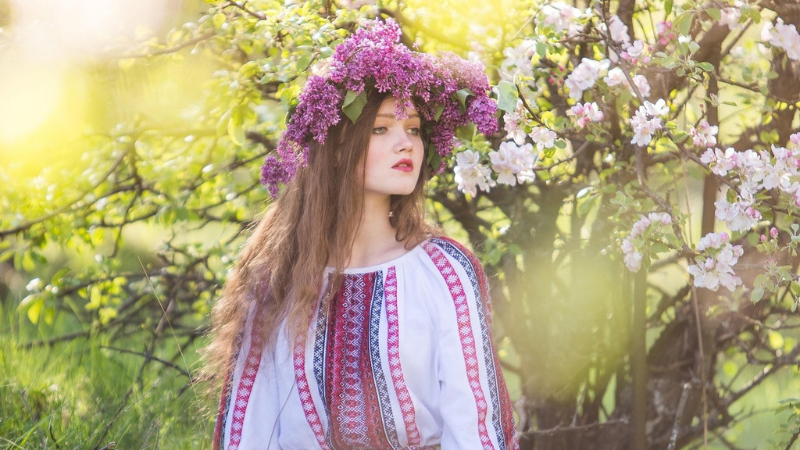
What Is a Vyshyvanka? Symbols, History and How to Wear Ukraine’s Embroidered Shirt Today.
Some garments are defined by their cut. This one is defined by its thread. Avyshyvanka is the traditional embroidered shirt of Ukraine, and its name comes straight from the verb vyshyvaty, “to embroider”. Take the embroidery away and what remains is a simple linen shirt. Leave it in place and you are holding a piece of regional history, family memory and, for many Ukrainians, national identity.
A short history of the embroidered shirt
Embroidered clothing has been made on the territory of modern Ukraine for well over a thousand years, but the shirt as we recognise it took shape in village life. Women spun flax or hemp, wove the cloth at home and cut it into plain rectangles so that nothing was wasted. The decoration came afterwards, and it was never random. Stitching was concentrated around the collar, the cuffs, the shoulder seams and the hem, the places where the body was thought to be most exposed to the outside world. Embroidery worked as protection as much as ornament.
For centuries the shirt was everyday wear for both men and women. By the late nineteenth century it had also become a statement. Writers and intellectuals, the poet Ivan Franko most famously, began wearing an embroidered shirt under a tailored city jacket, turning rural dress into a quiet declaration of belonging. That combination of folk shirt and modern tailoring still looks contemporary today.
What the symbols mean
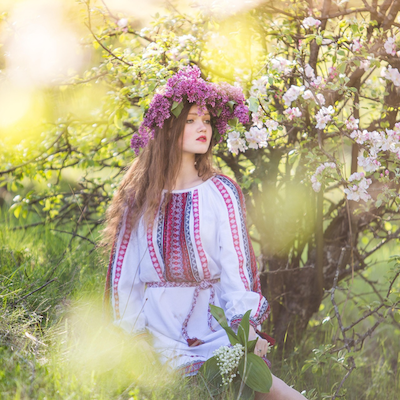
Ukrainian embroidery is a language of signs, and most of them are far older than the shirts that carry them.
- Rhombus and square. Often with a dot in the centre, read as a sown field and a wish for fertility and prosperity.
- Eight-pointed star. A solar sign associated with light, order and protection.
- Tree of life. A stylised plant rising from a root or vase, standing for the continuity of generations.
- Kalyna (viburnum). Red berries that symbolise beauty, lineage and the homeland itself.
- Oak leaves. Strength and endurance, traditionally stitched on men’s shirts.
- Poppies and grapes. Remembrance on one hand, family happiness on the other.
Colour matters as much as motif. Red speaks of love and vitality, black of the earth and of sorrow, white of purity, blue of water and sky.
One country, many shirts
There is no single canonical design. A trained eye can tell where a shirt comes from by its palette and technique alone. Poltava is known for delicate white-on-white embroidery that looks almost like lace. The Hutsul communities of the Carpathians favour dense geometric patterns in orange, green and yellow. Podillia produces tightly packed geometric bands in black and red, while the town of Borshchiv is famous for sleeves almost entirely covered in thick black wool thread. Central regions are associated with the red-and-black florals that many people outside Ukraine picture first.
A living tradition
Today the shirt appears at Easter and Christmas, at weddings and christenings, on a child’s first day of school. Since 2006, when a group of students in Chernivtsi came up with the idea, Vyshyvanka Day has been marked on the third Thursday of May. It has grown into an international celebration: offices, universities and whole cities put on embroidery for the day. In recent years the shirt has also become one of the most recognisable symbols of Ukrainian culture abroad.
How to wear a vyshyvanka today
The beauty of the garment is that it sits easily in a modern wardrobe. A few approaches that work:

Keep everything else plain. Embroidery is the focal point. Straight jeans, wide linen trousers or a simple midi skirt in a solid colour let it speak.
Borrow the Franko formula. A women’svyshyvanka blouse with full sleeves looks sharp under a tailored blazer or a sleeveless waistcoat, with the embroidered cuffs and collar left visible.
Try it dark. A black vyshyvanka, whether that means black embroidery on undyed cloth in the Podillia and Borshchiv manner or tonal stitching on a black shirt, reads as graphic and urban. It pairs well with leather, dark denim and silver jewellery.
Layer it the traditional way. Historically the shirt was worn under a bodice or vest. A laced corset or a pinafore dress over the top recreates that silhouette without looking like a costume.
Mind the fabric. Linen and cotton breathe, soften with wear and hold stitches well. Hand embroidery is slower and more expensive, but each piece is slightly different. Quality machine embroidery is a reasonable choice for everyday wear.
Wearing it with respect
You do not have to be Ukrainian to wear the shirt, and most Ukrainians are glad to see it worn. What matters is knowing what you have on: buy from makers who work with real regional patterns, learn where your design comes from, and treat it as clothing with a story, not as fancy dress. Wash it by hand in cool water, dry it flat and iron it on the reverse, and it will last long enough to be handed on, which is exactly how these shirts have always travelled through time.
Poppy Watt