
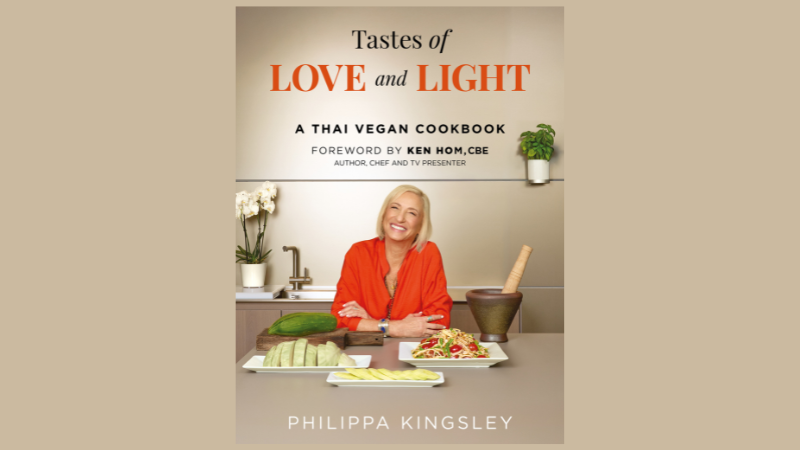
Tastes of Love and Light: Discovering the Heart of Thai Vegan Cooking.
There is something wonderfully generous about Thai food. The balance of flavours, the fragrance of fresh herbs and spices, the colour and presentation all come together to create food that is as much about the experience of eating as it is about satisfying an appetite.

Tastes of Love and Light: A Thai Vegan Cookbook by Philippa Kingsley takes that experience one step further. Part cookbook, part Thai cooking lesson and part personal journey, it is a beautiful exploration of food, compassion and the connection between what we eat and how we choose to live.
With 86 authentic Thai vegan recipes, Philippa demonstrates how traditional Thai dishes can be reimagined without compromising the character, balance or vibrancy of the cuisine she has spent decades mastering. From appetisers, salads and soups to curries, stir-fries, desserts and even cocktails and mocktails, there is plenty here to tempt committed vegans and anyone who simply loves good food.
Philippa’s own journey is at the heart of the book. A professional Thai chef who founded and ran a Thai catering company and cooking school for more than 20 years, her deep love of Thai culture, cuisine, Buddhism and animals ultimately led her towards a plant-based way of cooking and living.
With a foreword from celebrated chef and Thai food expert Ken Hom CBE, Tastes of Love and Light is not simply a collection of recipes. It is an invitation to slow down, cook with awareness and discover the joy that can come from preparing and sharing food with compassion.
We caught up with Philippa to find out more about her journey, her love of Thai cuisine and what inspired her to create this beautiful collection of recipes.
In Conversation with Philippa Kingsley
Your journey from celebrated Thai chef to vegan cook is a fascinating part of this book. Can you tell us about the moment or experience that made you decide to become vegan, and how did that change the way you approached Thai cooking?
There wasn’t an exact moment per se or experience that made me decide to become vegan. I would share that it was a definite process over a period of time of awareness and growth, coming from an open spiritual heart with the realization of how animals are treated in this world, including the heartbreaking reality of factory farming followed by the slaughter process.
My healing work was the initial wake-up call. I then found PETA and educated myself on a worldwide basis. Once one is awake and aware, you cannot go back to the beginning and see life through “rose-tinted spectacles”.
I would add that the experience with the duck in the slaughterhouse was profoundly sad and, as an animal communicator, I connected with what the duck was saying. I wrote about that in the book in the chapter What and Why Vegan.
I would share that when one is ripe and ready, that is how change manifests. People and situations come into our energy field. As human beings, we are all given free will.
I knew that I would need to approach Thai cooking from a different mindset. It just wasn’t right for me cooking and eating animals.
Thai cuisine is renowned for its balance of sweet, sour, salty, spicy and aromatic flavours. When you began “veganising” your recipes, what were the biggest challenges in maintaining that traditional Thai balance without using animal products?
There was no real challenge in maintaining the balance of the sweet, the sour, the salty and the spicy. All of the herbs and spices are fresh.
The only real issue was fish sauce. I was on a mission to find a “vegan” fish sauce, which I found at that time was the brand Coconut Secret: Coconut Aminos in the USA. That was the nearest taste at that time to fish sauce. I still like and use it here in the UK and it doesn’t have a weird taste. It can be found at Planet Organic.
There are other brands of vegan fish sauce now on the market and I would add that vegan fish sauce is also kosher.
There are two other specific brands of vegan fish sauce which I have tasted here in London. One is a Thai brand, and you will have to go to a Thai shop to buy it.
The other product that I leave out when I make curry pastes is shrimp paste.
The book is about much more than food and includes elements of your spiritual journey, Buddhism and your love of animals. How have these influences shaped the way you cook and your relationship with food?
I touched on that in Question 1. I would add that being a certified VortexHealing® Divine Energy Healing practitioner, Buddhism and being a trained animal communicator were massive influences on my orientation of how I viewed animals.
I didn’t have children in this life but had two adored and beloved English Cocker Spaniels, Voguie and Cosmo, who showed and shared unconditional love. As do all animals, irrespective of whether they are furry or feathered, four-legged or two-legged!
At a later date, six rescue chickens appeared whom I named Jemina, Jennifer, Victoria, Vivien, Juliet and Jennifer.
I would add that my former husband was very aware and supportive regarding animals, so there was no issue regarding that.
You have taught Thai cooking professionally for many years. What are the essential ingredients, techniques or pieces of advice you would give someone who wants to start creating authentic Thai food at home?
If one wants to cook Thai food at home, it’s a process of learning about the various herbs and spices. Thai cuisine is a totally different way of cooking to Western cooking.
It’s like a jigsaw puzzle. Once you are shown each piece of the puzzle and demystify the process, it helps you take the fear out of learning to cook Thai food.
For example, once you learn the basics, you can cut down the timeline of preparation by pre-cutting and chopping some ingredients the night before. Have everything all lined up in small bowls or small plates prior to cooking. Having good knives, woks etc. also help.
I am used to teaching people from all different levels of prowess in the kitchen. I love to teach people by making it interesting and fun too.
Tastes of Love and Light has been written as if you are personally taking a Thai cooking class with me. Let me teach you, let me guide you.
If you could invite our Women Talking readers to your table and cook them one dish from Tastes of Love and Light, what would you choose — and why is that particular dish special to you?
Let’s invite Women Talking readers to experience a Thai lunch, dinner or a Supper Club! Or a Thai cooking class followed by dinner!
One dish I would suggest is Chiang Mai Spicy Coconut Milk Curry Soup with Noodles and Vegan Chicken (Khao Soi).
It’s a meal in itself and incorporates many levels of taste and flavours.
It’s a mixture of a Red Curry Paste combined with a Burmese Curry Paste, coconut milk, soft noodles, crispy noodles and vegan chicken, topped with shallots and fresh limes.
It’s visually appealing and impressive to the eye. The taste encompasses a warm and cosy blend of the curry pastes with coconut milk, the texture of soft noodles and the crunch of the crispy noodles as a topping.
I’ve waxed lyrical because I love to cook this for people who love to open their culinary taste buds to something delicious and different.
A Taste of Love and Light
What comes across so strongly from Tastes of Love and Light is that Philippa Kingsley’s approach to food is about far more than creating delicious recipes. There is a real sense of intention behind the cooking, an appreciation for ingredients, tradition, culture and the pleasure of sitting down to enjoy food.
The recipes also demonstrate just how exciting vegan cooking can be. Thai cuisine lends itself beautifully to plant-based ingredients, with fresh vegetables, herbs, spices, coconut, chillies, citrus and aromatic pastes creating layers of flavour that need no apology or compromise.
For us, the real pleasure of a cookbook is discovering recipes that make you want to head straight into the kitchen, and Philippa certainly provides plenty of inspiration. Her recipes encourage you to experiment, explore Thai flavours and perhaps look at familiar ingredients in a completely different way.
With its stunning photography, wealth of recipes and the deeply personal story woven throughout, Tastes of Love and Light feels like a cookbook to return to rather than simply read once.
And perhaps that is the book’s greatest invitation: to cook with a little more awareness, eat with a little more appreciation and, most importantly, enjoy the simple pleasure of sharing good food.
From the Kitchen: Two Recipes from Tastes of Love and Light
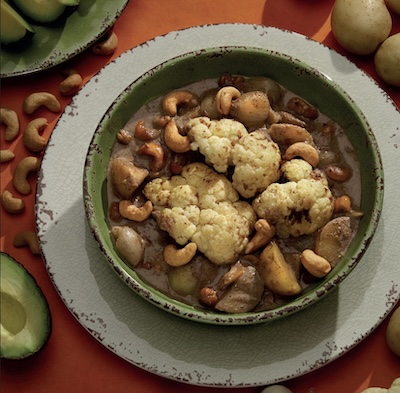
Philippa has kindly shared two recipes from the book with Women Talking readers, one wonderfully fragrant main course and a refreshing dessert to bring a little balance to the table.
Massaman Curry of Roasted Cauliflower, Cashews, Potatoes & Avocado
Gaeng Massaman Galamdok
The Mighty Magic of the Massaman Curry!
South Thailand comes to the forefront with a fragrant array of spices, combining India, Malaysia and Thailand. Massaman means “Muslim” and originates from the Malaysian Muslims who settled and blended into the tranquil setting of southern Thailand.
Thai Tips
- You will need to have a can of coconut milk in the refrigerator for a few days before making this dish.
- This recipe requires a wok and a saucepan with a lid.
- Tamarind water can be made a few days before and stored in a glass Mason jar in the refrigerator until needed.
Serves 4
Ingredients
- 4 tablespoons (60ml) sunflower or safflower oil
- Massaman curry paste — 4 tablespoons
- 1 large head cauliflower, separated into large florets
- 2 cans coconut milk — one chilled in the refrigerator and the other at room temperature
- 1 cup (250ml) tamarind water
- 3 tablespoons (45ml) Coconut Secret: Coconut Aminos
- 3 tablespoons (24g) coconut brown sugar
- 8 ounces (225g) small new potatoes or potatoes cut into 1-inch cubes, unpeeled
- 8 ounces (225g) small shallots or pearl onions, peeled
- 4 tablespoons roasted unsalted cashews, or a handful
- 1 avocado, peeled and sliced at the last moment before serving
- 1 handful cilantro leaves for garnish (optional)
Method
Preparing the Tamarind Water
You can buy tamarind in block form. To prepare it, pull a handful off the block and place it in a glass bowl. It will be sticky.
Boil 2 cups (500ml) of hot water and pour it over the tamarind. Leave it to soak for 30 minutes.
When it’s cool enough to put your hands in the water, pretend you are a child again as you mash and squeeze the pits around as if playing with playdough!
Then drain in a sieve, squeezing the remaining pits to get all the liquid out. Keep the tamarind water and throw away the pits.
You can store the prepared tamarind water in a glass Mason jar. It will keep in the refrigerator for a week.
Preparing the Curry
Preheat the oven to 350°F.
Heat a wok. When it starts to smoke, add 3 tablespoons sunflower or safflower oil.
Add 2 tablespoons Massaman curry paste and let it slowly cook until the colour is darker and the aroma tantalises your senses.
Turn down the heat and add the cauliflower florets, coating them with the paste. Cook gently, turning all the time.
After 5 minutes, remove the cauliflower with a slotted spoon and place it in a roasting pan.
Add oil to the cauliflower florets, making sure they are all moistened. Roast the cauliflower in the oven until it is cooked but still firm to the touch, approximately 30–40 minutes. Keep checking to see how it is cooking.
Whilst the cauliflower is roasting, wipe the wok, give it a quick wash and dry it. Lucky you if you own two woks, as you won’t need to wash the first wok!
Take the cold can of coconut milk from the refrigerator.
Heat the wok. When it starts to smoke, add 2 tablespoons of the thick cream from the top of the can. Turn down the heat and melt the coconut cream.
Add 2 tablespoons Massaman curry paste. Mix and blend together until the colour darkens and you can smell the aromas.
Mix the rest of the can and add to the wok. Add the second can of coconut milk and mix well.
Add the tamarind water, the Coconut Aminos and the coconut nectar or brown sugar. Mix together.
Add the potatoes and shallots or pearl onions. Mix well, then transfer to a saucepan.
Cover with a lid and simmer until the potatoes and onions are soft.
When the curry is cooked, add the cashews to the curry. If you adore cashews, you can always add more!
Transfer the roasted cauliflower to the saucepan.
To Serve
Put the cauliflower on a plate or in a bowl, making sure that the sauce with the potatoes, shallots and cashews surrounds the cauliflower.
You can spoon some of the sauce over the cauliflower.
Cut the avocado into slices and arrange on the plate or a side dish.
Add a flourish of cilantro if you choose.
Coconut, Lemongrass & Lime Sherbet
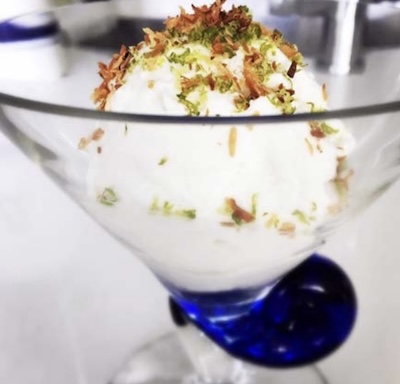
Ghati Bai Takrai Manao
As all Thai cuisine is so full of herbs, spices and strong flavours, I love to create balance with desserts. The simplicity of this sherbet recipe complements any main Thai dish.
There is no sugar in this recipe, making it perfect for anyone who is diabetic.
The easiest way to make homemade non-dairy ice cream or sorbet is with an electric ice cream maker. Just be sure to put the bowl in the freezer a few days before making the ice cream, as it needs to be very cold.
Thai Tips
- Always keep a few cans of unsweetened coconut milk in the refrigerator in order to have the thick cream at the top separate from the thinner coconut milk for this and other recipes.
- You will need two cans for this recipe.
- The brand I like best is Aroy. You will see “For Dessert” on the can, so it’s thicker than your average coconut milk. Of course, if you can’t find it, you can use non-dessert coconut milk.
- The toasted coconut and lime zest toppings can be stored separately in a small covered container or glass Mason jar in your refrigerator.
Serves 4
Ingredients
For the topping
- 3 tablespoons dried unsweetened shredded (desiccated) coconut
- Zest of 1 lime
For the sherbet
- 1 stalk lemongrass, finely sliced, then finely chopped/minced
- 1 cup (250ml) water for the lemongrass
- 2 cans very cold coconut milk from the refrigerator
- 1 pinch sea salt
- ⅔ cup (150ml) freshly squeezed lime juice
- 1 cup (250ml) ice-cold water
Method
Preparing the Topping
Put the 3 tablespoons dried unsweetened shredded (desiccated) coconut in a small frying pan. No oil is required.
Dry roast until it is brown and toasty, taking care not to burn it. Set aside to cool.
Grate the zest of 1 lime and set aside.
Preparing the Sherbet
Start with the lemongrass. Cut away the outer tough layers and trim down the stalk.
Finely slice the lemongrass, then finely chop or mince.
Put the lemongrass in a small saucepan and add 1 cup of water. Gently heat for 5 minutes or until the lemongrass is softened.
Drain, remove and set aside to cool.
In a glass bowl, add all the thick cream from both cans of cold coconut milk.
Add the lemongrass and a small pinch of sea salt. Gently stir with a wooden spoon.
Add the lime juice and mix gently.
Add the ice-cold water and mix gently.
Plug in the ice cream maker and add the bowl from the freezer. Add the plastic paddle and the top.
Turn the ice cream maker to ON. Everything will be turning.
Pour the mixture into the bowl and watch the mixture magically turn into a sherbet!
It will probably take about 20–25 minutes. Use a plastic spatula if you need to encourage the sherbet.
You will know it is ready when it becomes a sherbet and the ice cream maker makes a noise. Turn it OFF.
You can either eat the sherbet immediately with the toasted coconut and lime zest topping or put it in a covered container and pop it in the freezer for another “sherbety moment in time”!
The Book
Tastes of Love and Light: A Thai Vegan Cookbook by Philippa Kingsley is published on 10 September 2026.
Hardback: £35
Paperback: £22.99
Ebook: £9.99
Our Final Thoughts
There is something particularly lovely about a cookbook that gives you more than recipes. Tastes of Love and Light invites us into Philippa’s world, her love of Thailand, her understanding of its cuisine, her spiritual journey and her deep compassion for animals.
Whether you are already vegan, considering introducing more plant-based meals into your diet, or simply someone who loves Thai food, this is a book that encourages you to explore.
And if Philippa’s recipes are anything to go by, there is certainly plenty of delicious exploring to do.
Perhaps the best place to start is with a wok, a handful of fresh herbs and spices, and an open mind.
Poppy Watt