
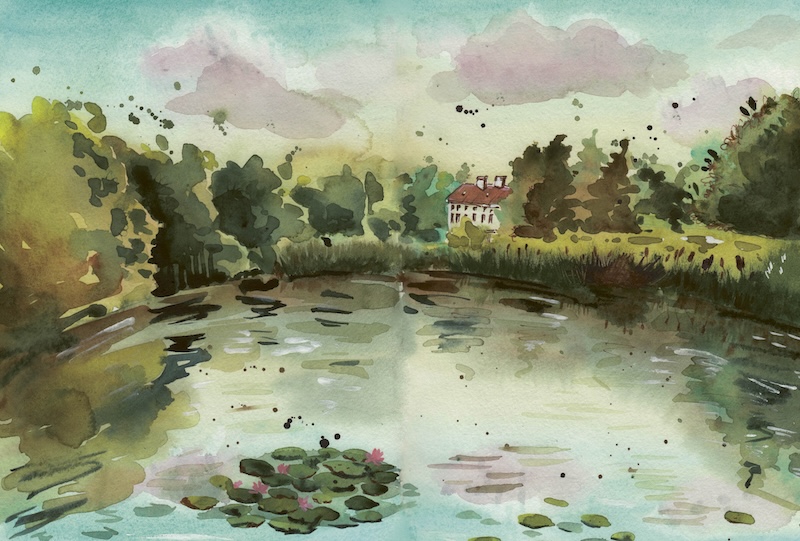
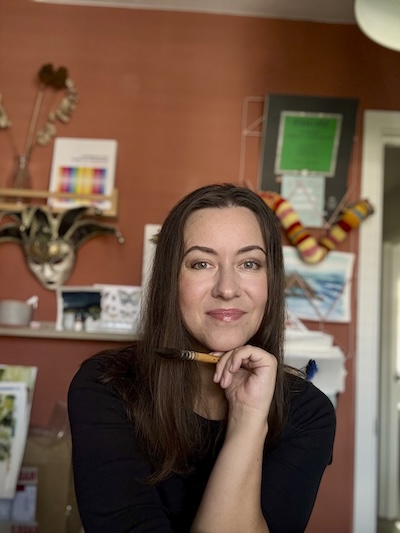
Finding Calm in Colour: Exploring Nature and Watercolour with Inga Buividavice – In a world that often feels fast, noisy and digitally overwhelming, Inga Buividavice invites us to slow down and reconnect — not just with our creativity, but with the natural landscapes that quietly ground us. A UK-based visual artist, tutor and designer, Inga has built a global community of over 155,000 followers through her signature earthy watercolours, celebrated for their gentle textures, intuitive use of colour and deeply emotional connection to nature.
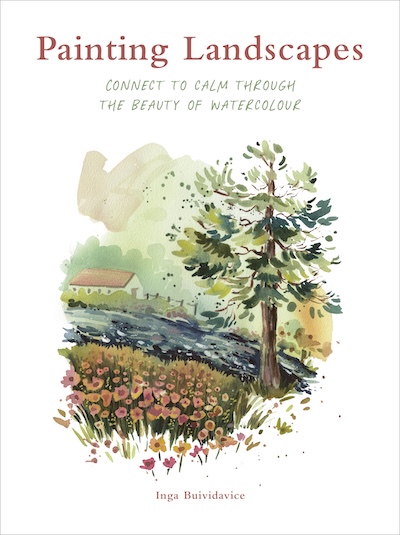
Her latest book, Painting Landscapes – Connect to natural landscapes, find calm and appreciate beauty through the mindful medium of practical watercolour, is more than a guide to painting the outdoors. It is an invitation to pause, observe and translate the beauty of water, mountains, trees and seasons into moments of calm on paper. With a warm, encouraging voice and step-by-step guidance suitable for both beginners and experienced artists, Inga shows how watercolour can become a joyful, restorative practice — one that nurtures creativity while fostering a deeper appreciation for the world around us.
To explore the connection between creativity, nature and wellbeing in more depth, we spoke to Inga about her artistic journey, the mindful power of watercolour, and how even the smallest creative moments can help us reconnect with ourselves and the world around us. From technique to emotional connection, her approach offers a refreshing reminder that art doesn’t have to be perfect to be meaningful — it simply has to be honest.
Your work is often described as earthy and soulful, with a strong emotional connection to nature. What first drew you to landscapes as a subject, and how has that relationship evolved over time?
Painting landscapes allows me to capture memories of beautiful places I visit. In my early days as an artist, like many other artists, I turned to nature for inspiration. Spending more time outdoors in search of my next subject, I began to notice new beauty in my daily walks. Observing sunlight through leaves and the shifting hues of foliage, I brought these experiences into my art. Painting landscapes became not only about depicting places, but most importantly about capturing my emotional connection with nature.
In Painting Landscapes, you beautifully blend technical instruction with mindfulness and calm. Why was it important for you to frame watercolour not just as a skill, but as a restorative, mindful practice?
For me, it’s a search for something real and honest. In such a digital world, painting becomes a self-healing practice, working with my hands and creating something tactile and tangible. There’s also a sense of nostalgia in that, a longing for a time before smartphones, when turning the pages of a photo album felt more sincere than many of today’s posed selfies. Beyond that, painting naturally encourages mindfulness and deep focus. I rarely feel as present as I do when I’m painting, and it’s one of the few ways I can truly disconnect from the noise of everyday life.
The book covers everything from water and mountains to seasons and travel sketches. Is there a particular landscape or subject that you personally find the most grounding or emotionally resonant to paint, and why?
I especially love painting meadows. For me, nothing is more beautiful than flowers, colourful blooms bring life to an otherwise green landscape. When painting flowers, you can move freely between abstract marks and more detailed petals, and it’s that play between the abstract and the figurative that keeps my interest and feels deeply grounding.
You guide readers through techniques such as dry brush and creating texture with masking fluid. For beginners, which technique do you think is most transformative in helping them gain confidence with watercolour?
I’m especially drawn to working wet-on-wet, applying colour to wet paper, and I think it can be incredibly transformative for beginners. The way pigment spreads across a damp surface is one of watercolour’s most distinctive qualities. It brings a sense of lightness and spontaneity, and it teaches you to let go.
There’s very little you can control with wet-on-wet, so you learn to work with what happens rather than against it. Accepting that unpredictability and finding a place for it within the painting can be very freeing, and that’s where confidence often begins to grow.
With a global Instagram community of over 155,000 followers, how has sharing your creative journey online influenced the way you teach, write, and connect with readers through your books?
I’ve noticed that many beginners struggle with confidence more than with any specific skill. In my approach, I try to give students two important things. First, clear step-by-step guidance, so they can rely on someone else’s experience while gradually building trust in their own abilities.
But above all, I want to encourage creating for the sake of creating. I often repeat that enjoying the process of playing with watercolour is more important than the final result. I want people to fall in love with the process itself. It’s incredibly liberating to come to your art practice with no expectations — and then, one day, to see something magical happen.
For someone feeling creatively stuck or disconnected from nature, what small, gentle first step would you encourage them to take—brush in hand or otherwise—to begin reconnecting through art?
I would always encourage people to start small. Whether they realise it or not, everyone has some connection to nature as we’re all part of the natural world. It helps to think about what you already enjoy: maybe walks in the park, long hikes, or time spent in your own garden. Can you bring a small part of that experience onto paper?
It might sound vague, but focusing on something simple like a single tree or plant makes it feel far less overwhelming. Draw or paint it many times, and perhaps one day add a background. By building on what you already know and allowing room for small experiments, you’ll soon notice your observation improving, your eye becoming sharper, and a growing sense of connection both to nature and to your creative self.
Painting Landscapes gently reminds us that creativity doesn’t need to be perfect, productive or pressured to be meaningful. Through Inga Buividavice’s thoughtful guidance and soulful approach to watercolour, painting becomes a quiet act of presence — a way to reconnect with nature, with us, and with the simple beauty found in slowing down.
As Inga’s work continues to inspire artists across the world, her message remains refreshingly reassuring you don’t need to travel far, paint flawlessly or follow rigid rules to create something beautiful. Sometimes, all it takes is a brush, a moment of stillness, and the willingness to truly see the landscape in front of you.
Painting Landscapes by Inga Buividavice, Published by Leaping Hare, £15.99
Poppy Watt