
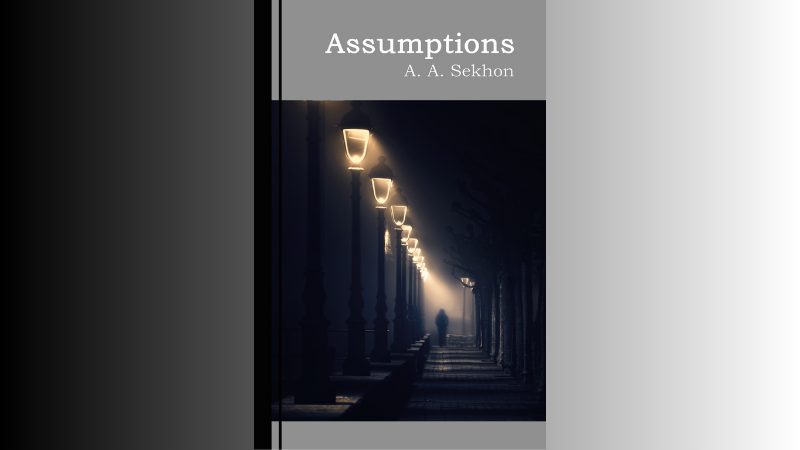
Assumptions: Unmasking Identity in Victorian London – What if everything the world believed about you was wrong?
A. A. Sekhon’s Assumptions opens with a man waking up in a London morgue — a startling, disorienting moment that plunges the reader straight into the shadowed corridors of 1880s London. Glittering wealth, rigid social codes, and hidden moral strictures frame a city where secrecy, judgement, and quiet desperation thrive.
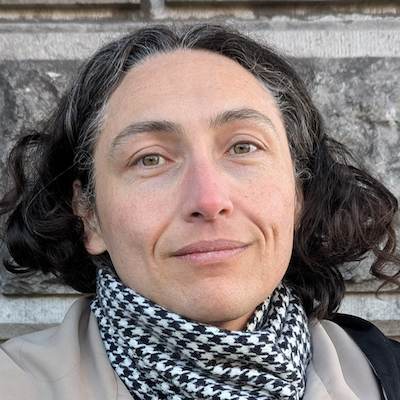
Far more than a period thriller, Assumptions is a study of human frailty and identity: how reputation shapes us, how assumptions mislead us, and how fragile our understanding of each other can be. At its heart, it is character-driven fiction, rich with psychological tension and historical detail, and the first instalment in Sekhon’s Passing Normal series, which explores the cost of falling outside society’s rigid boundaries.
Women Talking spoke with A. A. Sekhon about the inspirations behind the story, the enduring tensions of Victorian society, and why the themes explored in Assumptions continue to resonate today.
Assumptions is set in 1880s London and opens with a man waking up in a morgue — a chilling and immediately disorienting premise. What first sparked the idea for this story, and why did you choose late Victorian London as the backdrop?
I first came up with the idea on a flight back from Japan. There is a concept in Japanese that translates roughly as “mask face” and refers to the harmonious way one must comport oneself when dealing with all but one’s inner circle, to maintain societal harmony. After over two weeks of observing it in person (and with several hours to reflect upon it on the flight home), it struck me that this social dynamic I had witnessed in modern-day Japan was like that of Victorian-era Britain. Inspired, I pulled down the tray table in front of me and started writing in a notebook I had with me. I had been wanting to write a story set in Victorian Britain for some time, and this was just the impetus I had needed. The Victorian era in many ways laid the foundation for our modern world, particularly as the period progressed; for this reason (among others), I chose to set Assumptions in the 1880s. Given my love for gothic fiction, London seemed the natural choice, as it served as the backdrop of so many of the great gothic novels of the nineteenth century.
As for the opening, where the protagonist wakes up in a morgue, it simply seemed the natural place to begin. I wanted to pique readers’ interest while also enabling them to feel the same sense of disorientation the main character does.
As a scholar of history, how does your academic understanding of the Victorian era shape your storytelling? Are there particular social tensions, moral codes, or psychological pressures from the 1880s that you were especially keen to explore?
Absolutely! Everything, from the characters to the social mores to potential avenues for developing the plot, is informed by my knowledge of the period. Even the past layout of the city itself plays a role—there are buildings mentioned in the story that simply don’t exist anymore, having fallen to the Blitz or simply the ravages of time.
Perhaps most crucially, the late Victorian era was a time when the strictures of propriety formed a gilded cage around even the most privileged members of society. Reputation was everything. Often, all it took to spell an entire family’s ruin was one moral failing on the part of its patriarch. Add to this the fact that people in general were far more religious, and that sexism, racism, xenophobia, and homophobia were not only far more overt but taken as the norm, and one begins to understand just how exacting and taxing it would have been to live in those days.
Yet I feel modern readers can connect with the story in part because many of the societal ills of the era are still with us, albeit to a lesser degree. Poverty may not be as extreme, but it still exists. Racism, xenophobia, and sexism may be more covert, but they certainly haven’t gone away. The recent headlines and rulings about transgender people, complete with moral panic in some quarters, find a definite parallel in the treatment of homosexuals during Victorian times.
Your work is described as character-driven psychological thriller fiction. What fascinates you most about human nature, and how do you construct characters whose inner worlds feel both authentic and unsettling?
Human nature is endlessly fascinating to me because of its variation—not only within the population but also within any given individual’s mind. We all come in myriad combinations, and we have different aspects of ourselves that we may or may not show to everyone we meet. It’s that variety that is fascinating to me. Meet a bear, and it will act like a bear every time. Meet a person, and one never quite knows what one is going to get. I love that, and I strive to capture that complexity in my writing. I do my utmost to make the characters I write just as good and bad and wise and foolish and sublime and flawed as any real person one might meet. I constantly observe the people I encounter and do quite a lot of self-reflection as well. I comb through the bits and bobs of personality—mannerisms, mindsets, blind spots, and so on—and recombine these in new ways. Often, I’ll take them to extremes, for dramatic purposes, but they still must be believable on a human level. In my own experience, immersion in a story is only possible if the characters feel authentic. Sometimes, this very authenticity means that readers might feel unsettled things might hit a little too close to home, or they might have to grapple with uncomfortable questions stemming from the story and its characters. That’s okay. I encourage them to sit with that unsettled feeling and, if they feel up to it, to examine it. That, too, is part of being human.
Victorian society was a time of strict social expectations and hidden transgressions. Do you think the theme of ‘assumptions’ — about identity, morality, or status — resonates just as strongly with modern readers?
I think so, just in a different way. If one looks today at the groups that haven’t yet achieved true equality or parity, or even at those at the top who supposedly benefit from the status quo, there is still pressure to conform. What is considered masculine or feminine, for example—as well as who gets to express those aspects of their being and how—is still a hot-button issue. There are still diverging societal expectations for certain groups who, underneath, are really not so different from anyone else—we all share a common humanity, after all. Double-standards, prejudice, and intolerance—these are Victorian-era ills that, while their expression may look a little different today, are still with us. Classism may not be as overt, but it still exists. A blow to one’s reputation might not seal one’s doom nowadays, but it will cause problems in one’s life nevertheless—doubly so if one belongs to a marginalised group. How one can express oneself and exist in the world, and to what degree one can even take part in it, is still policed by society at large, from the legal system to social censure. We’re fooling ourselves if we think we’ve left all that behind, as a society.
For readers new to your writing, what do you hope they feel — or question — after finishing Assumptions? And are you currently exploring another historical period or psychological thread in your next work?
I am currently working on the first sequel as well as the prequel to Assumptions—all part of the Passing Normal series. The sequel picks up where Assumptions left off (1887), while the prequel deals with Henry’s childhood, youth, and young adulthood in early Victorian Scotland and England. As in everything I write, I strive to bring history to life with complex characters who feel relatable and human. I don’t want to spoil the plot of the sequel, but I will say that it doubles down on themes of othering and the dangers inherent in navigating a society that passes judgment all too readily.
I hope that readers of my work will feel a sense of empathy for their fellow human beings, and that they will reflect on what it truly means to be human. I hope that, after reading it, they will find it easier to be more forgiving, both of themselves and of others, in their day-to-day lives. I hope they will be motivated to embody the kindness, courage, and compassion our fractious world so needs right now.
What lingers after the final page is not simply the mystery, but the question the novella quietly presses upon the reader: how often do we mistake appearance for truth?
In revisiting the strictures of Victorian London, Sekhon invites us to examine our own age of snap judgements and social performance. The corsets may be gone, but the pressure to conform remains familiar. Assumptions remind us that identity is rarely straightforward — and that beneath the surface of respectability, vulnerability and contradiction reside in equal measure.
For readers who enjoy historical fiction with psychological depth and moral nuance, this is a novella that unsettles in the most thoughtful way — and leaves us reflecting long after the gaslights dim.

Poppy Watt
#Competition
We have 1 copy of Assumptions to offer one lucky reader.
Here’s How to Enter:
- Follow the Women Talking Instagram Account
- Like & share the post.
- Make a COMMENT, stating why you would like to win – Anyone who comments will be entered into the prize draw to win.
- This competition has now closed.
GOOD LUCK!
*The editor’s decision is final and there is no cash alternative
*The competition is open to UK residents only.
*The winner will be chosen at random and notified on Instagram within 7 days of the contest closing date.
*This promotion is in no way sponsored, endorsed, or administered by, or associated with, Facebook.
*The winner will be contacted by DM on social media.