
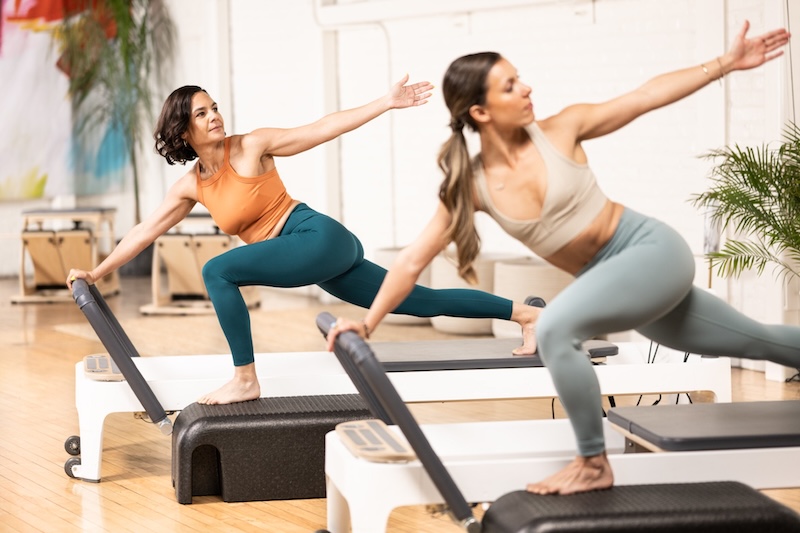
Why women are choosing Pilates over intense cardio – For years, a slim body was associated mainly with intense cardio, long running sessions and workouts designed to burn hundreds of calories. More and more people are now noticing that a body constantly pushed through exhausting training often starts to look tired, tense and inflamed rather than light, balanced and naturally toned. That is why Pilates is increasingly replacing traditional cardio for people who want to improve their physique without overwhelming the body.
Pilates works differently from workouts focused purely on calorie burn. It changes the way muscles function, improves posture, restores fascial elasticity and teaches the body to move more efficiently. This is why many people notice a flatter stomach, longer-looking legs and less tension in the shoulders after just a few weeks of training — even without dramatic weight loss. The body starts to look slimmer because it stops working against itself.
Why intense cardio does not always create a lean-looking body
Traditional cardio is highly effective at increasing energy expenditure, but it does not always improve movement quality. When the body repeats the same movement patterns for long periods of time, it also reinforces the same tension patterns. If someone runs with tight hips, a stiff chest and poor core stability, the body often responds by increasing protective tension instead of moving more freely.
That is why many people who rely only on intense workouts experience neck stiffness, lower back tension or heavy legs. The muscles stay active, but the body struggles to distribute load efficiently. Physically, the body may become fitter and stronger, yet it does not always look balanced or proportionate. The body needs more than movement alone — it needs quality of movement.
Pilates reshapes the body through better muscular balance
Pilates is not based on chaotic exhaustion. Every movement follows a specific rhythm, range and breathing control. As a result, muscles work intensely but without excessive shortening or joint compression. The body begins to build tension in a much more balanced way.
The biggest transformation usually happens in the deep stabilising muscles responsible for core control and pelvic alignment. When the centre of the body starts functioning properly, the shoulders relax downward, the core activates naturally and the glutes stop remaining “asleep.” This changes the way the body walks, sits and breathes. The silhouette starts looking leaner even without major weight changes.
Reformer Pilates creates a leaner body faster than traditional cardio
The reformer allows the body to work against controlled resistance without the overload created by repetitive jumping or long cardio sessions. The springs engage muscles through the entire range of motion, including the return phase of each exercise. Because of this, the body maintains muscular activation longer than during many popular fitness workouts.
The way Pilates affects the fascia also plays a major role. Smooth, controlled movement under tension improves tissue elasticity and reduces stiffness. Legs begin to look lighter, the waist becomes more defined and posture naturally improves. This is one of the reasons why Reformer Pilates is so often chosen by people looking for a lean, toned physique without aggressive cardio training.
How Pilates changes the stomach and waistline
Many people practising Pilates notice changes around the waist faster than with traditional fat-burning workouts. This comes from activating the deep stabilising layers of the core. The transverse abdominal muscle starts functioning like a natural corset that supports the spine and stabilises the body.
The body no longer needs to compensate with excessive tension in the lower back or hips. The waistline becomes more visible because the ribs and pelvis return to better alignment. Visually, the difference can be dramatic. A flatter stomach is often the result of improved tension control rather than endless crunches.
Pilates is one of the best workouts for fascia
Fascial tissue is responsible for movement fluidity and the transfer of force between muscles. When fascia becomes overloaded or dehydrated, the body starts moving stiffly. Even slim people may then appear heavier or more rigid. Pilates works with fascia very differently from most intense training methods.
Fluid transitions between movements, controlled breathing and lengthened positions improve tissue glide. The body stops holding protective tension in the neck, hips and calves. This is why the body after Pilates often looks softer, lighter and more harmonious rather than tight and exhausted.
The biggest changes people notice after regular Pilates usually include:
- a flatter stomach through improved deep core stability,
- lower, more relaxed shoulders with less neck tension,
- leaner-looking legs thanks to improved fascial function and pelvic control,
- stronger and more naturally activated glutes,
- improved chest mobility and breathing quality,
- a taller, lighter and more balanced posture.
Pilates improves posture faster than many fitness workouts
People focused on intense cardio often concentrate purely on burning calories. Meanwhile, the body can appear visually heavier simply because of poor posture. A forward head position, collapsed chest and anterior pelvic tilt all affect body proportions.
Pilates helps reorganise these movement patterns. The spine becomes more stable without excessive lower back tension. The shoulder blades move more freely, the neck becomes less overloaded and movement feels more effortless. Many people look taller, leaner and lighter after only a few weeks of consistent practice, even with minimal weight loss.
Why Pilates places less stress on the nervous system
Intense cardio increases stimulation throughout the body. For some people this feels motivating, but during periods of high stress and fatigue it can overload the nervous system even further. The body remains in a constant “fight or flight” state, making recovery and sleep quality worse.
Pilates works differently. Breathing, rhythm and focused movement help calm excessive stimulation. Recovery becomes faster and muscles respond better to training. This is why many people leave Pilates sessions feeling both physically worked and mentally lighter at the same time.
A Pilates reformer allows intense training without overloading the joints
One of the biggest issues with traditional cardio is repetitive impact. Long-distance running or high-intensity jumping workouts increase pressure on the knees, hips and spine. The reformer allows the body to build strength and endurance without the same level of joint compression.
The springs adapt resistance to the individual. This allows the body to work hard while maintaining smooth, controlled movement. It is especially beneficial for people returning to exercise after a break or dealing with overload-related tension. A professional Pilates reformer makes it possible to train intensely without feeling physically drained afterward.
Lean legs and a toned body require proper glute activation

The glutes are responsible not only for appearance, but also for pelvic stability and movement quality. When they are weak, the body begins overloading the lower back and the front of the thighs. Legs can then appear heavier and the body loses proportion.
Pilates activates the glutes very effectively through controlled, lengthened movement patterns. The body learns to generate strength without locking the hips. This creates a more elastic movement quality and better overall alignment. That is why many people notice improvements in the appearance of their legs and glutes faster through Pilates than through cardio alone.
A Pilates studio offers greater control over movement quality
The type of workout is only part of the equation. The training environment matters as well. A good Pilates studio allows the instructor to carefully observe body alignment and quickly correct technical mistakes. This helps the body reinforce healthy movement patterns instead of repeatedly overloading the same structures.
High-quality Pilates equipment increases movement precision even further. A stable platform, smooth spring resistance and proper reformer setup all influence how the body experiences load. The body responds to these details much faster than most people expect.
Regular Pilates works because it improves multiple systems at once
Regular Pilates practice can:
- improve posture and movement mechanics,
- reduce tension in the neck and lower back,
- increase activation of the deep stabilising muscles,
- improve fascial elasticity and movement fluidity,
- help the body manage tension and recovery more effectively,
- create a lean physique without constantly overloading the joints.
Pilates changes more than just the way the body looks
Before summer, many people search for a workout that improves the body quickly without constant exhaustion. Pilates answers that need differently from intense cardio. It is not based purely on calorie burn, but on improving movement quality, muscular balance and body alignment.
That is why the body after regular Pilates often looks more harmonious. The stomach becomes more stable, movement feels more elastic and the body regains its natural lightness. The effect does not come from temporary muscle “pump” after training. It comes from changing the way the body functions every single day.
This article was created in collaboration with balanced-body.lv
Poppy Watt