
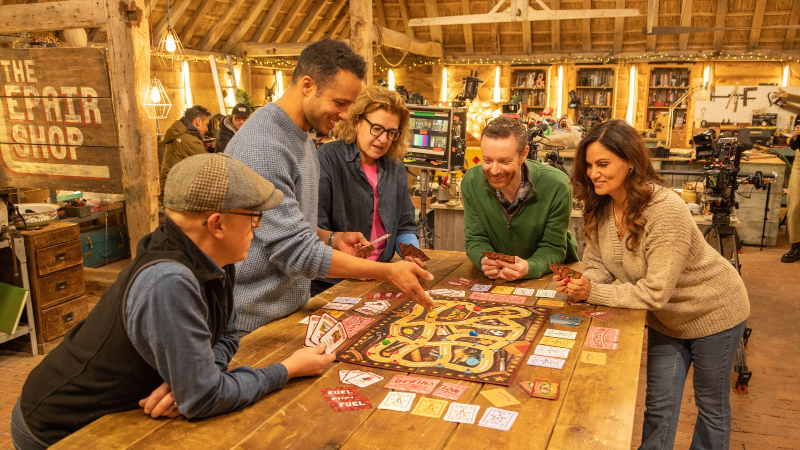
From Taxi Driver to Games Designer: Meet Rachel Lowe MBE – Sometimes the best business ideas come from the most unexpected places. For Rachel Lowe MBE, it was behind the wheel of a taxi in Portsmouth, waiting at a red traffic light. That everyday frustration sparked the idea for a board game based on navigating a city, picking up fares and finding the best routes and the rest, as they say, is history.
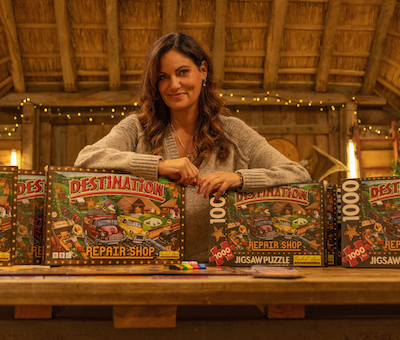
Since launching her first games in 2004, Rachel has gone on to create an impressive career, creating more than 50 games and puzzles inspired by much-loved television programmes and films. From Harry Potter and Downton Abbey to Call the Midwife and The Repair Shop, her work brings familiar worlds into our homes in a different way.
Awarded an MBE for services to business in 2009, Rachel is also passionate about encouraging others to follow their entrepreneurial ambitions. I caught up with her to talk about the inspiration behind her business, the lessons she has learned along the way, and how she turns our favourite screen stories into games and puzzles. I’ve also been trying out her The Repair Shop board game and 1,000-piece jigsaw, so I was keen to discover more about the thinking behind both.
Your entrepreneurial journey began while you were working as a taxi driver at university. What was it about that original idea for a Destination board game that made you think, “This could actually work”?
The idea literally came to me while I was behind the wheel. I stopped at red traffic lights, which is annoying when time is money, and the thought that came to me was, “Red light – miss a turn.” That was the moment the seed was planted.
I was driving taxis in my hometown of Portsmouth, and the map of the city is how I pictured the board looking. I thought, “Wouldn’t it be fun if people could experience the challenge of being a cab driver, navigating a busy city, picking up fares and managing their route?”
From there, I started sketching out ideas for routes, fares and landmarks. What excited me was that everyday situations translated so naturally into a game. I created Destination Portsmouth and Destination London as two projects in one, and they both launched during the Christmas season of 2004.
You went from winning an enterprise competition at university to launching Destination London and seeing it become a huge success at Hamleys. What do you remember most about that moment, and did you ever imagine it would lead to the career you have today?
It was an incredible feeling, completely surreal. I remember walking through Hamleys and seeing families picking up Destination London, and I just couldn’t believe it was really happening. The fact that it became the No 1 best seller that Christmas was beyond anything I could have imagined. It was a moment in time that I will always be proud of.
I couldn’t have dreamed where it would lead. From there, I built on the success with more city editions, then expanded with variations such as Destination World and Destination Christmas. Co-branding became an adventure, partnering with major retailers and licence holders such as Downton Abbey and Harry Potter.
It really opened the door to my career in the toy and games industry. It has been a rollercoaster, lots of ups and downs over the past 20 years, but the game has stood the test of time.
You’ve now created more than 50 games and puzzles, many based on hugely popular films and TV shows. What is the process of turning a much-loved programme or film into a game?
It starts with research and understanding what makes that programme or film special to its audience. The creative element needs to be true to the theme, so the behind-the-scenes research is important.
Sometimes I get sent still images from a TV series that hasn’t come out yet, or a movie script so I can make the game fit the theme, and sometimes I get to go on set. Visiting the set of Call the Midwife was incredible; I even got to sit at and play the piano in the pub on set!
Then it’s about translating that world into something people can play. The theme needs to run through the experience, from the game theme and artwork to the language and details. It also has to work as an enjoyable game. A familiar name might attract someone initially, but the experience needs to make them want to play again.
I’ve been trying out the Destination The Repair Shop board game and the 1,000-piece jigsaw, so I’m interested in how you approach a licence such as The Repair Shop. How do you capture what people love about the programme while still making the game or puzzle enjoyable in its own right?
The Repair Shop has such warmth, and that was something I wanted the products to reflect. People connect with the programme through its familiar setting, the skill of the experts and the personal stories behind the objects.
With the board game, I wanted to bring that recognisable world into the Destination experience while keeping it accessible. Fans can enjoy the connection to the programme, but anyone can play it.
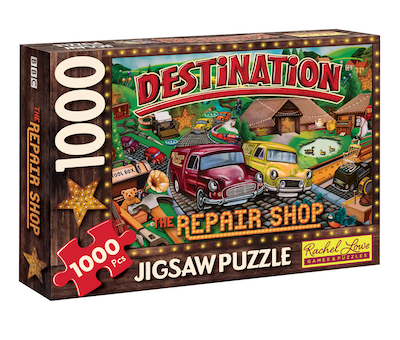
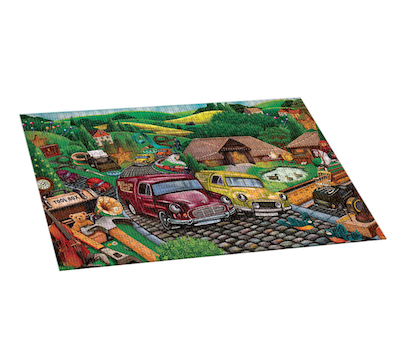
The jigsaw offers a different way to spend time with that world. It’s a quieter experience, something people can enjoy at their own pace, either alone or together. Both products should feel like a natural extension of the programme.
The Repair Shop is all about craftsmanship, restoration and the stories behind treasured objects. Were there particular elements of the show that you were keen to bring into the game and jigsaw?
The sense of care was particularly important to me. An object might not have great financial value, but its connection to a person or a family can make it irreplaceable. That is such a lovely foundation for a programme, so with this in mind, you play the game as a ‘Guardian of Heirlooms’, with your own Repair Shop van, delivering heirlooms and antiques to The Barn. The game itself may one day become a treasured family possession, full of memories of the people you played them with.
I recently got to meet the cast, and they had fun playing the game at The Barn. Seeing it enjoyed in the place that inspired it was a very special moment.
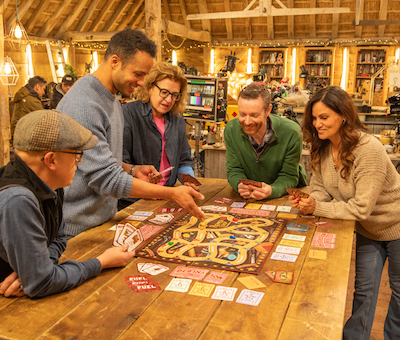
You’ve worked with everything from Harry Potter and Toy Story to Call the Midwife, Downton Abbey and The Repair Shop. What makes a TV or film licence particularly exciting from a game designer’s point of view?
A distinctive world gives you so much to work with: memorable locations, characters, stories and details that fans recognise immediately.
I love finding the elements that will translate naturally into a game. Every licence brings a different creative challenge, whether it’s an adventure, a period drama or a programme rooted in real people and their stories.
There is also a responsibility that comes with working on something people love. Fans know these worlds incredibly well, so the details matter. One of my highlights is launching a licensed game and seeing fans connect with it instantly.
What has changed most in the games and puzzles industry since you started creating games back in 2002? Are people looking for something different from a board game today?
They’ve evolved enormously. When I started, most games were quite traditional: roll the dice, move the piece. Now, there’s an incredible range of creativity, including cooperative games, narrative-driven experiences and digital hybrids. But what hasn’t changed is the joy of playing together. That social connection remains at the heart of it all.
We’re also seeing a strong demand for nostalgia. People love revisiting familiar brands and retro themes, but they also want games that feel modern and inclusive.
In a world where we’re constantly connected to screens, board games bring us back to real connection, laughter, conversation, teamwork and even a bit of friendly competition. It’s one of the reasons I’m so passionate about creating games.
You appeared on Dragons’ Den in 2005 and went on to build a hugely successful business. What have you learned about entrepreneurship along the way, particularly as a woman building a business in what can be a very competitive industry?

My appearance was filmed in September 2004 and screened in January 2005. It was the first series, and I was terrified! The pitch didn’t go as I’d hoped, and I left without investment. But I took their feedback on board and kept going.
One of the biggest lessons has been that rejection is part of business. You have to be willing to listen, learn and improve without allowing someone else’s opinion to decide your entire future.
As a woman building a business, I think it’s important to have confidence in what you bring to the table and to make your voice heard. But confidence doesn’t mean having all the answers. Asking for help and building the right network are strengths.
The journey has included real setbacks as well as wonderful achievements. Entrepreneurship takes creativity and determination, but it also requires practical decisions, resilience and a willingness to keep learning.
You were awarded an MBE for services to business and now support other entrepreneurs through your role as Entrepreneur in Residence at the University of Portsmouth. What do you enjoy about helping the next generation of entrepreneurs?
Mentoring is something I’m very passionate about. I work with schools, universities and enterprise programmes to share my story, especially to encourage young people to believe in themselves. I also support start-up founders through business mentoring, helping them navigate challenges, build resilience and stay focused on their goals.
Sometimes all someone needs are a bit of encouragement and practical guidance to take that next step. I enjoy helping people see possibilities in an idea and think through what they need to do to make it happen. I have made many mistakes in business, and I help others to avoid making those same mistakes, many of which I could only learn from through experience.
My role as Entrepreneur in Residence at the University of Portsmouth is especially close to my heart, as I was a student there when I had the idea for my game all those years ago.
Finally, after more than two decades of creating games, what still excites you about coming up with the next one – and is there a film, TV show or idea you’d love to turn into a game that you haven’t had the chance to do yet?
There’s still something magical about taking an idea and turning it into a physical product that people can open, play and enjoy together. Seeing families enjoy something I’ve created never gets old.
I also love the research and discovery. Every new theme introduces me to different places, people and stories, and I’m always thinking about how those could become part of a game.
At the moment, Destination Portsmouth100 is particularly special to me. Returning to my hometown to celebrate its centenary as a city feels like coming full circle.
There are always films, programmes and ideas I’d love to explore, but one that I would love to do is Destination Diddly Squat! I am a huge fan of Clarkson’s Farm, and I think everything Lisa & Jeremy have done to build awareness and support for British farming is just incredible, and something to be celebrated. I pretty much have the whole game worked out, as it fits the Destination mechanic perfectly, just in case I get the opportunity to pitch it to them. This would be on my bucket list of editions to create. I have visited the farm a few times now and it really is a beautiful place.
What I particularly enjoyed about talking to Rachel is hearing how an idea that came to her while driving a taxi has grown into a business spanning more than 50 games and puzzles. Her story is a reminder that you don’t necessarily need a grand plan to get started – sometimes you just need to recognise a good idea and have the determination to see where it takes you.
Having been trying out The Repair Shop board game and jigsaw, I can see how the warmth of the television programme translates into products designed to be enjoyed at home. The board game brings a little friendly competition to family time, while the jigsaw offers a more relaxed way to spend time with the familiar world of The Barn.
More than 20 years after her first games launched, Rachel is still full of ideas, supporting aspiring entrepreneurs and looking ahead to new possibilities. And with Destination Diddly Squat firmly on her wish list, it seems there could be plenty more adventures to come.
Poppy Watt