
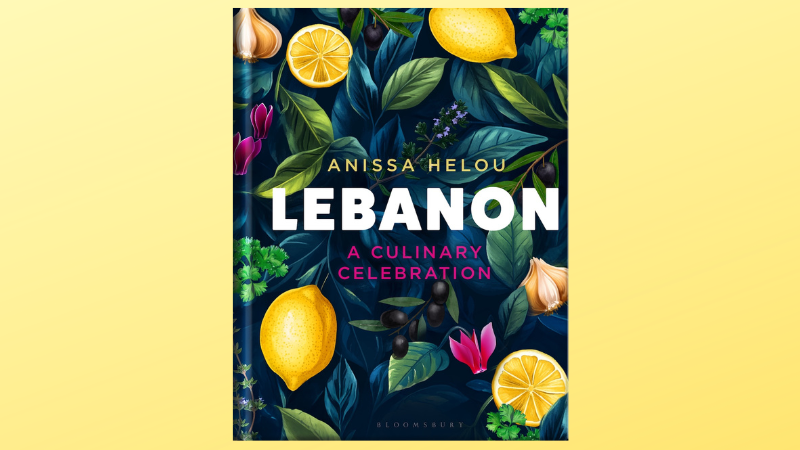
Lebanon – A Culinary Celebration – I adore Lebanese food. I’m a regular shopper at our local Mediterranean food stores and am a great fan of local Lebanese restaurants, like Sidra and Ruba. This fabulous book – published this week, is arguably the only Lebanese cookbook you’ll need. Lebanon by Anissa Helou is published by Bloomsbury at £30 and is packed with fascinating insights, cultural history, and over 160 sumptuous recipes by legendary Guild of Food Writers’ Lifetime Achievement winner Anissa. From colourful small plates and ivory dips to luscious stuffed vegetables as well as more elaborate preparations for impressing, this is a comprehensive collection of recipes which make up Lebanon’s rich tradition of cooking, suitable for any occasion.
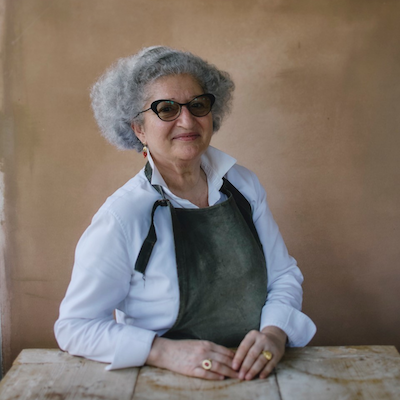
Born in Lebanon to a Syrian father and Lebanese mother, Anissa is the author of numerous award-winning cookbooks, including Feast which was chosen by the New Yorker as one of the 10 best cookbooks of the century so far.
For the price of a takeaway, I’d urge you to invest in a copy of Lebanon, but here to whet your appetite are a couple of recipes:
Beet Dip MÜTABBAL SHMANDAR – SERVES 6
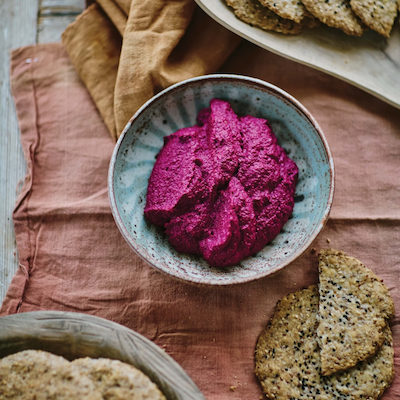
“I first learned how to make this dip in Aleppo, where I used to lead culinary tours before the uprising. One of the highlights of my tours was a cooking lesson with Maria Gaspard, a charming woman chef who taught my groups all kinds of fabulous dishes, including this one, which is also widely made in Lebanon. Not only is it very beautiful with its vibrant purple colour, but it is also delectable. Maria boiled the beets, but I like to roast them, so they don’t get watery and their flavour is more intense.”
1 pound 5 ounces (600 g) beets
⅓ cup (80 ml) tahini, or to taste
1 clove garlic, peeled, minced to a fine paste
Juice of 1½ lemons, or to taste
Sea salt
Extra virgin olive oil to drizzle over the dip
1 tablespoon finely chopped flat-leaf parsley or slivered pistachios for garnish
Preheat the oven to 450ºF (220ºC).
Wash the beets and cut any excess stalks but without cutting into the beets. You do not want them to bleed during baking. Wrap each beet with aluminum foil and place on a baking sheet. Bake in the preheated oven for 1 to 1½ hours depending on their size, until soft but not mushy.
Remove from the oven onto a large cutting board. Unwrap each, then peel and cut into chunks. Place in the bowl of a food processor. Add the tahini, garlic, and lemon juice and process until you have a smooth purée.
Transfer to a large mixing bowl. Add salt to taste and more lemon juice and/or tahini if you feel the dip needs it. Spread in a shallow round or oval serving bowl, making grooves here and there. Drizzle a little olive oil in the grooves and sprinkle with the chopped parsley or slivered pistachios. Serve with good bread.
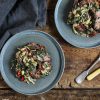
Green Bulgur Wheat “Risotto” MAFRÜKEH – SERVES 4-6
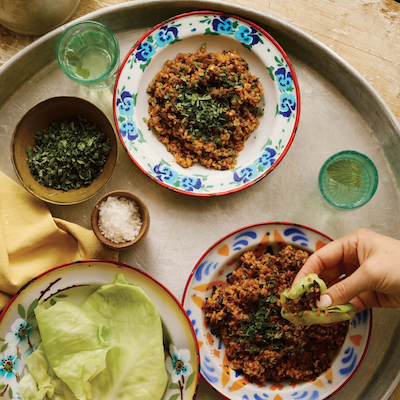
“Another interesting dish from Deir Intar down south, where the bulgur wheat is cooked with greens and a tomato sauce. Again, I had never come across it before, having only had bulgur wheat cooked in a fresh tomato sauce. However, the addition of scallions and herbs here makes for a fresher and more intriguing combination.
Also, it is served like tabbüleh and is scooped with fresh vine leaves when in season or raw cabbage leaves, a kind of cooked tabbüleh, as it were.”
⅓ cup (80 ml) extra virgin olive oil
1½ cups (250 g) coarse bulgur wheat, soaked in cold water for 30 minutes
1 bunch scallions
(about 100 g), trimmed, sliced fairly thin
1 bunch flat-leaf parsley (about 200 g on the stalk), washed, dried, most of the stalks discarded, finely chopped
¾ bunch mint (about 150 g on the stalk), leaves only, washed, dried, finely chopped
½ cup tomato paste, diluted in 3 cups (750 ml) water
Sea salt
Fresh vine leaves or cabbage leaves to scoop the mafrükeh
Put the olive oil in a medium wide pot and place over medium heat. Drain the bulgur wheat and add to the pot. Stir for a couple of minutes, then add the scallions, parsley, and mint. Mix well, then add the diluted tomato paste. Season with salt to taste.
Cover the pan and let bubble for 10 to 15 minutes, until the bulgur wheat has absorbed all the liquid and is done.
Wrap the lid with a clean kitchen towel and put it back over the pot. Let cool.
Serve at room temperature with either vine leaves if they are in season or cabbage leaves.
The Seasoned Gastronome