
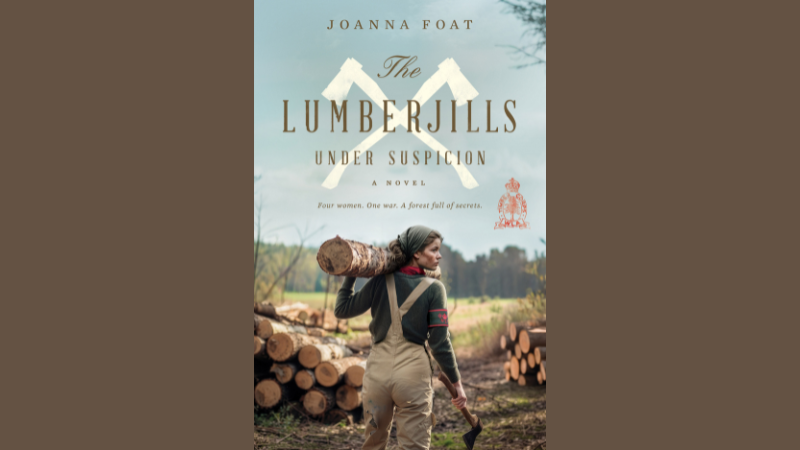
Book Review: The Lumberjills Under Suspicion by Joanna Foat – There are some books that you enjoy simply because they’re well written, and then there are books that resonate on a much deeper, more personal level.
The Lumberjills Under Suspicion by Joanna Foat falls firmly into the latter category for me.
Long before I picked up this novel, I already had a fascination with the remarkable women of the Women’s Timber Corps. My own godmother was a Lumberjill during the Second World War, and as a child I remember sitting captivated as she shared stories of her time working in Britain’s forests. I also loved looking through old photographs of her in her uniform, proudly standing beside enormous, felled trees, images that stayed with me long after I was old enough to appreciate what they truly represented.
Those memories made reading this book an especially meaningful experience.
The Women History Almost Forgot
When we think of the Second World War, many of us immediately picture the Land Girls, factory workers or women serving in the armed forces. Yet the Women’s Timber Corps rarely receives the recognition it deserves.
These women undertook physically demanding work that had traditionally been carried out by men, many of whom had left to fight overseas. Timber was an essential wartime resource, needed for everything from pit props in coal mines to railway sleepers, telegraph poles and military infrastructure.
Without these women, Britain’s war effort would have looked very different.
Joanna Foat shines a much-needed spotlight on their contribution, blending meticulous historical research with an engaging fictional story that never loses sight of the real women who inspired it.
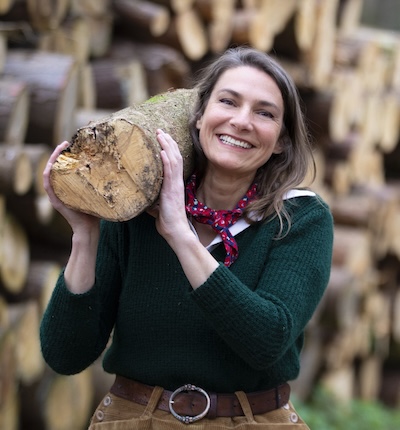
A Story of Courage and Friendship
Set during the summer of 1940, The Lumberjills Under Suspicion follows Keeva O’Connor and her fellow recruits as they arrive in Britain’s forests, determined to prove themselves despite widespread scepticism.
Their work is hard, dangerous and physically exhausting. They face suspicion from local communities, hostility from some of the men around them and the ever-present backdrop of a nation at war.
When accusations of espionage begin to circulate, the women must rely on one another more than ever.
While there is mystery woven throughout the novel, what stayed with me most was the strength of the friendships. Joanna Foat beautifully captures the solidarity that developed between women who were breaking barriers simply by turning up each day and doing jobs many believed they were incapable of doing.
More Than Historical Fiction
One of the things I admired most about this novel was its authenticity.
Joanna Foat has spent more than a decade researching the Women’s Timber Corps, meeting many of the surviving Lumberjills and preserving their stories through exhibitions, talks and her writing.
That dedication shines through on every page.
The forests feel alive, the work feels real and the emotions never seem forced. Rather than reading like a history lesson, the facts are seamlessly woven into a compelling story that keeps you invested in the characters while quietly teaching you about an often-overlooked part of Britain’s wartime history.
A Personal Reflection
Reading this book also made me think about how many family stories quietly disappear over time.
I find it fascinating when conversations reveal what distant relatives or family friends did during the war, ordinary people who suddenly found themselves doing extraordinary things because their country needed them.

The Second World War required people to adapt in ways that previous generations could never have imagined. Women stepped into roles that had been almost exclusively male, proving not only that they could do the work, but that they could excel at it.
I’ve always admired that spirit of resilience.
These women weren’t looking to make history; they were simply answering the call when their country needed them most. Their courage, determination and willingness to take on unfamiliar and physically demanding work helped keep Britain going during some of its darkest days.
Books like this ensure their contribution isn’t forgotten.
Final Thoughts
The Lumberjills Under Suspicion is much more than a wartime novel. It’s a story about courage, friendship, prejudice, resilience and the remarkable women who quietly changed perceptions while helping to win a war.
Whether you’re already interested in social history or simply enjoy well-researched historical fiction with memorable characters, this is a book well worth reading.
For me, it was both an enjoyable novel and a touching reminder of my godmother and the generation of women she belonged to. They rarely spoke about themselves as heroes, yet their stories continue to inspire us decades later.
Joanna Foat has given those women a voice, and in doing so has created a moving tribute to one of Britain’s most overlooked wartime organisations.
Rating: ★★★★★
A fascinating and heartfelt novel that celebrates the courage of the forgotten women who helped keep Britain’s forests—and its wartime spirit—alive.
Poppy Watt