
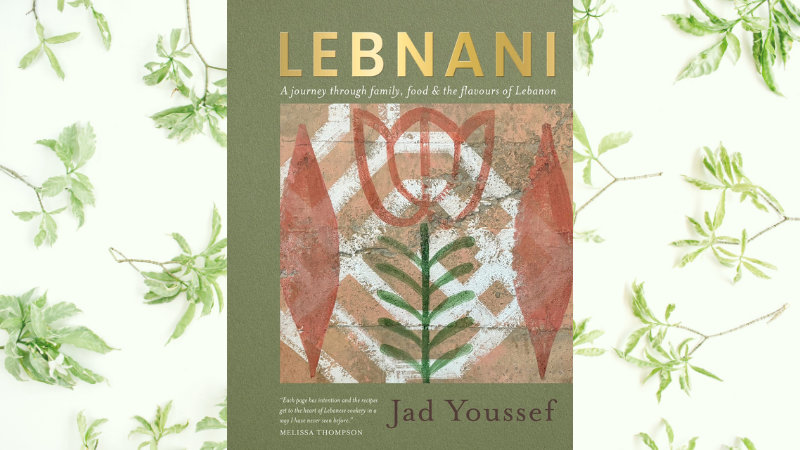
LEBNANI: A Journey Through Family, Food and the Flavours of Lebanon – This fabulous debut cookbook offers something distinct in the Middle Eastern food space: an exploration of purely Lebanese cuisine. It moves beyond the broader Levantine genre, and author Jad Youssef presents over 80 traditional recipes exactly as they’ve been made for generations. Now running Lebnani, an award-winning family restaurant in Reigate, Surrey, with his wife Aga, he was born in Beirut during the civil war. Youssef learned to cook from his mother Khadija, whose tabbouleh was famous within the family. The book combines these family recipes with personal narratives about how food sustained his family through conflict.
Published by Meze at £28 for a truly inspirational hardback, the book captures the flavour and rhythm of the everyday Lebanese table, with chapters that echo the meals and the occasions that bring people together: Lebanese Mornings, Mezza at Home, Classic Mezza, Tabkha (everyday meals), Mashawi (grills), Sandwiche (street wraps), Helweyet (sweets) and Namlieh (the pantry). Here are the secret spice blends, time-honoured techniques and the beloved dishes of his mother, aunts, and grandparents that gather everyone around the table to feast family-style. Family stories are threaded throughout, tracing how food sustained Lebanese families through conflict and change. The daily rituals of shopping at souks, picking olives, baking bread and cooking together are woven into the national identity and resilience.
On reading this gorgeous book, you’ll no doubt want to add a few well known Middle Eastern ingredients to your next food shop. Here in Twickenham, of course, we have two wonderful Mediterranean supermarkets so we’ve no excuses.
Here are a couple of recipes to encourage you to treat yourself to this book.
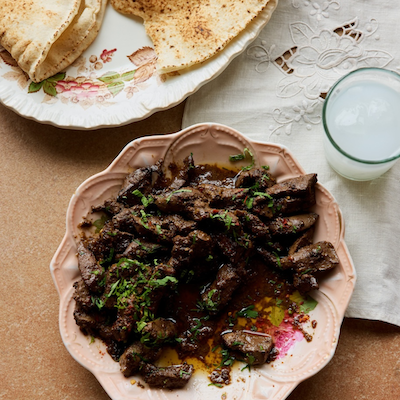
Sawda Ghanam (Lamb livers seared with garlic, lemon & Baharat) Serves 4–5
“This dish takes me back to those early mornings when my father would come home from the butcher with fresh sawda wrapped in butcher’s paper, still warm. My mother always said it had to be cooked the same day, no refrigeration, just cleaned well and straight into the pan. She’d rinse it with lemon juice, pat it dry, and sauté it with garlic, lemon juice, a little Baharat, and a kiss of heat. We’d eat it with fresh bread, fresh mint, and a raw spring onion on the side. It’s the food of real people – honest, warm, and full of soul. And just like many things in our culture, it’s meant to be shared.”
500g lamb liver (ask your butcher for very fresh, firm liver with the membrane removed)
4 tbsp extra virgin olive oil
5 garlic cloves, finely grated
1½ tsp fine sea salt, or to taste
½ tsp freshly ground black pepper, or to taste
½ tsp Baharat (Lebanese 7 spices)
¼ tsp chilli flakes or 1 small fresh red chilli (optional)
Juice of 1 lemon
Fresh chopped parsley, to garnish
Clean the liver well and trim off any connective tissue or small veins. Slice into bite-size strips, about 1cm thick. Pat dry thoroughly with kitchen paper to help it sear properly rather than steaming.
Heat the olive oil in a wide sauté pan over medium-high heat. Once hot, add the liver pieces in a single layer (do not overcrowd the pan). Let them sear undisturbed for about 2–3 minutes to develop colour, then flip and cook the other side for another 2–3 minutes. The liver should be browned on the outside but still tender and just slightly pink inside – if overcooked it will become dry and tough. Add the garlic, salt, black pepper, Baharat, and chilli (if using) to the pan. Sauté for another 30 seconds until the garlic is fragrant. Finally, squeeze over the lemon juice and stir briefly to coat the liver.
Transfer immediately to a serving plate, drizzle with a touch more olive oil, and garnish with fresh parsley.
Serve with warm Lebanese khobez, classic sides – raw onions, radishes, fresh mint – and, if it’s evening, a small glass of arak.
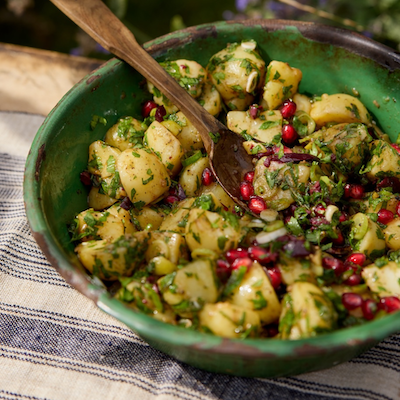
Salatét l’Batata (Fluffy potatoes dressed in lemon, olive oil & pomegranate) Serves 4–5
“This salad was always part of our Sunday table when I was growing up in Beirut. My mum made it early in the morning so the garlic, lemon, and olive oil could soak into the warm potatoes. When pomegranates were in season, she’d toss in the seeds for colour and sweetness. We never needed mayonnaise, just fresh herbs and good olive oil.”
800g waxy potatoes, such as Jersey Royals or Charlotte
20g fresh flat-leaf parsley
20g fresh mint leaves
2 spring onions
40g pitted black or green olives
80g fresh pomegranate seeds (about ½ pomegranate)
4 tbsp freshly squeezed lemon juice (about 2 medium lemons)
60ml extra virgin olive oil
3 garlic cloves, finely grated
1½ tsp fine sea salt, or to taste
1 tsp freshly ground black pepper
2 tbsp pomegranate molasses
Start by scrubbing the potatoes well under cold running water. Place them whole (skins on) in a deep pot, cover with cold water, and add a pinch of salt. Bring to a boil, then reduce to a simmer and cook until fork-tender, about 20–25 minutes. You should be able to pierce them easily, but they should not fall apart.
While the potatoes cook, wash the parsley and mint thoroughly in a bowl of cold water with a splash of white vinegar or a pinch of salt. Swish the leaves to remove any dirt, drain, and rinse twice more under cold water. Dry completely using a clean towel or salad spinner, then finely chop and set aside.
Rinse and slice the spring onions thinly, using both the green and white parts. Cut the olives into halves or small pieces. If using a fresh pomegranate, slice it open and gently remove the seeds, discarding the bitter membrane.
Once the potatoes are cooked, drain and allow them to cool slightly. While still warm (but not hot), peel by hand or with a small knife. Cut into quarters and place in a large bowl. Add the lemon juice, olive oil, garlic, salt, and pepper. Gently fold to coat all the cubes while the potatoes are still warm, allowing them to absorb the dressing. Add the chopped herbs, spring onions, olives, and pomegranate seeds. Mix again gently, just until combined, then drizzle with the pomegranate molasses.
Allow the salad to sit at room temperature for 20–30 minutes before serving. Serve at room temperature as part of a mezza, alongside grilled chicken, kafta, or fish – or simply enjoy by itself.
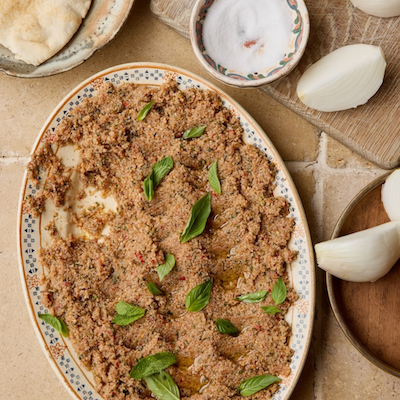
Kibbet Banadoura – Juicy tomato kibbé from the south of Lebanon. Serves 4–5
Now we’re talking real Southern roots. No true Kibbet Banadoura from Jabal Amel comes to life without the soul of the dish, the téh’wijé – that special, fragrant herb mix that gives the raw kibbé its unique flavour, identity, and memory. In the southern hills of Lebanon, this dish isn’t written in books, it’s passed down by taste, by scent, by watching Teta crush herbs with her hands.
Kibbet Banadoura is the humblest yet most soulful kibbeh of our land – the flavour of barefoot summers, clay bowls, and mountain silence. No meat. No fire. No frills or tricks. Just the purest fruits of the earth: sun-warmed tomatoes, hand-picked herbs, and olive oil pressed from your neighbour’s trees. It’s eaten fresh with romaine leaves or warm bread, and usually in good company, around a table full of stories.
For the base
250g fine brown burghul

3–4 large ripe heritage vine tomatoes (they should be very soft and juicy)
1 small brown onion, grated
1 tbsp tomato paste
1½ tsp fine sea salt, or to taste
½ tsp freshly ground black pepper
½ tsp ground cumin
60–80ml extra virgin olive oil
For the téh’wijé
10–15 fresh mint leaves
10–15 fresh basil leaves
5g fresh marjoram
1 fresh red chilli (use a mild or hot variety to taste and deseed if preferred)
1–2g edible dried rose petals, gently crushed (optional, for fragrance and depth)
To prepare the base
Rinse the burghul well under cold water. Soak for 10–15 minutes until it softens, then squeeze it dry with your hands or using a muslin cloth. It should be fluffy, not wet.
Grate the ripe tomatoes into a wide mixing bowl using a box grater, keeping all the juice and discarding the skins. Add the grated onion and tomato paste, then season with salt, pepper, and cumin. Mix gently.
To prepare the téh’wijé
Ensure all your herbs are fresh, washed well, and dried thoroughly. Finely chop the mint, basil, marjoram, and chilli. Combine them into one fragrant, colourful blend along with the rose petals, if using.
Add the téh’wijé directly into the tomato bowl. Stir gently to blend.
To finish the kibbé
Add the soaked, drained burghul to the tomato and herb mixture. Begin kneading with clean hands for about 5–7 minutes, just as our mothers did. The mix should become cohesive, smooth, and slightly sticky, not watery or dry. Adjust the salt and spice to taste. Let it rest for 5 minutes.
Just before serving, drizzle with extra virgin olive oil and gently mix. Plate in a shallow dish, flatten the surface with the back of a spoon, and decorate with a few mint or basil leaves if you like. Serve immediately with crisp romaine leaves or warm khobez, and a few raw onion wedges for those who know how to eat it right.
The Seasoned Gastronome