
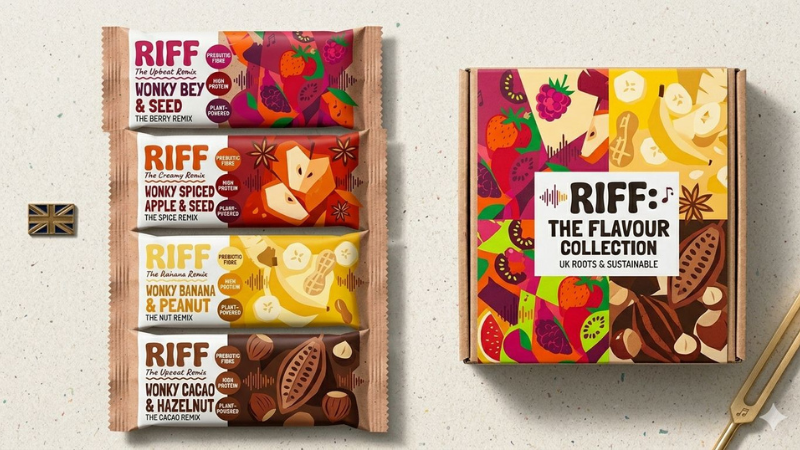
From Wonky Fruit to Wonderful Snacks: Meet the Young Entrepreneurs Fighting Food Waste.
We’ve all been guilty of leaving fruit in the fruit bowl just a little too long. A banana develops a few brown spots, an apple isn’t quite the perfect shape, and before we know it, they’re destined for the food waste bin.
Yet millions of tonnes of perfectly edible food are wasted every year simply because it doesn’t look quite right.
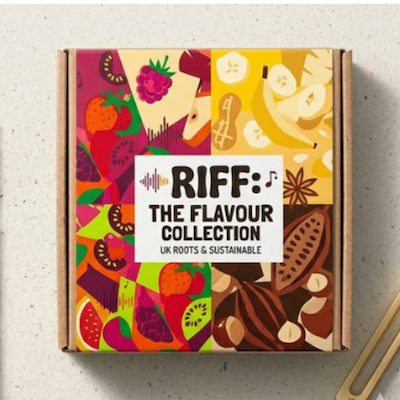
That’s why I was delighted to discover Riff Snacks, a young British start-up that’s turning surplus and “wonky” fruit into nutritious snack bars packed with fibre, protein and flavour.
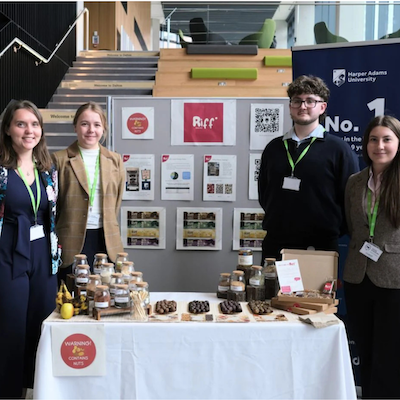
What makes their story even more inspiring is how it all began. The founders first met through the Harper Adams Young Enterprise Start-Up programme and spotted an endless supply of bruised bananas sitting in their university’s community fridge. Rather than seeing waste, they saw opportunity.
Today, the company is on a mission to reduce food waste while creating genuinely healthy snacks that people actually want to eat. Better still, their recipes evolve with the seasons, making the most of whichever surplus ingredients are available.
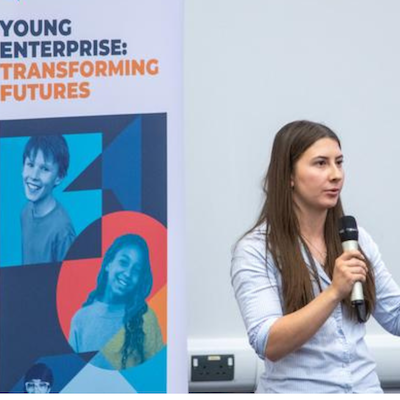
I caught up with Riff co-founder Lucie Campbell to find out more about their journey, their mission and why rescuing food could be one of the easiest ways we can all make a difference.
A university project that became something much bigger
Like many successful businesses, Riff wasn’t created with a grand business plan. It began as a practical university project before quickly growing into an exciting business opportunity.
Riff began with a surplus of bruised bananas in your university community fridge. Was there a particular moment when you realised this wasn’t just a great idea for a project, but a business that could genuinely make a difference?
“We honestly started Young Enterprise simply as a more tangible way of turning classroom theory into a more hands-on way of learning. But everything completely shifted for us once we reached the UK regional and national finals. Having actual food industry professionals look us in the eye and tell us, ‘This is exactly the right moment for such a range,’ and ‘This is precisely what the market has been crying out for,’ was the perfect call to arms.
Hearing people from the industry, not just being polite but truly backing our business model, gave us the confidence to take a leap of faith. That was the moment we realised this was far more than a university project, and we registered the company.
Now, we’re focusing on growing our fledgling business and seeing just how many tonnes of surplus fruit we can rescue and reimagine into delicious snack bars.”
Changing perceptions about “wonky” produce
One of Riff’s biggest challenges isn’t making great snacks; it’s changing people’s perceptions about surplus ingredients.
Many people still associate ‘wonky’ or surplus fruit with lower quality. What would you say to someone who is hesitant about eating products made from rescued ingredients?
“We saw this first-hand when talking to people at the Shrewsbury Food Festival. Thankfully, most consumers now understand that ‘wonky’ simply refers to appearance. Surplus, on the other hand, is a harder thing to explain.
We find that speaking to people face-to-face and showing them the exact produce we use helps immensely, but educational posts on social media can be equally informative. There is absolutely nothing wrong with the fruit itself; it’s purely a visual thing, and the nutritional quality remains exceptional.
In fact, the way we produce our bars underpins their nutritional benefits because we use the whole banana, including the peel. We also rescue cacao husks and wonky berries, and because everything is frozen and freeze-dried right at source, it locks in the essential nutrients. It’s actually much higher quality than many traditional dried fruit powders made from ‘perfect’ fruit, which can lose a significant amount of their goodness during processing.
Through Riff, we hope to tackle the stigma surrounding wonky produce head-on.”
Great taste comes first
For Lucie and the team, sustainability alone isn’t enough. Their snacks have to be something people genuinely enjoy eating.
Your bars combine sustainability with impressive nutrition, delivering around 10g of fibre and 10g of protein. How important was it to prove that reducing food waste doesn’t mean compromising on taste or health?
“Proving that you don’t have to compromise on taste or health was incredibly important to us from the very outset. Having sustainability at the heart of our business and sourcing rescued ingredients is fantastic, but at the end of the day, the product has to taste amazing and be genuinely good for your body if it’s going to succeed.
If Riff doesn’t satisfy a craving, people simply won’t buy it again, which means we can’t make a long-term impact on global food waste.
It’s a major challenge, and we’re continually in the kitchen refining and improving our recipes. That said, we remain true to our original vision that combining high-quality nutrition, great taste and upcycled ingredients is the best way forward for the food industry. We’re showing that eating sustainably can be delicious, nutritious and convenient.”
Working with the seasons
Because Riff uses rescued ingredients, the availability of fruit naturally changes throughout the year. Rather than seeing this as a problem, the team sees it as an opportunity.
Your recipes change depending on the surplus ingredients available each season. Has working with nature’s unpredictability been one of your biggest challenges, and has it also led to some unexpected flavour discoveries?
“Yes, dealing with nature’s unpredictable timelines is definitely going to be a challenge as the months go on and the company evolves. Luckily, because we use freeze-drying, it makes our rescued fruit shelf-stable for a considerable period of time, which takes a lot of the pressure off our immediate supply chain.
Honestly, we also see this unpredictability as an exciting opportunity to celebrate the natural rhythm of the seasons rather than fearing it.
We see this as the perfect opportunity to introduce speciality flavours such as a Winter Carrot Cake bar, an Autumn Pumpkin Spice bar or perhaps even a zingy Rhubarb bar in the spring. We find that people are becoming increasingly used to seasonal variations and limited-edition products, and those realities make our brand feel even more authentic.”

One simple change everyone can make
Reducing food waste doesn’t have to involve a complete lifestyle overhaul. Sometimes the smallest habits make the biggest difference.
If every household in the UK made just one small change to reduce food waste, what would you encourage people to start doing today?
“Use your freezer! People sometimes get a bit scared of frozen food, but it can be absolutely amazing for reducing waste. Instead of letting leftovers or older produce sit in the fridge and spoil, bag it up, pop it into the freezer and defrost it when you need it.
If you have a freezer, use it to its full capacity. Also, be conscious of what you’re buying and try not to overbuy fresh produce.”
Advice for future entrepreneurs
Having already won national awards and preparing to represent the UK in Europe, Lucie is keen to encourage others to pursue their own ideas.
As a young start-up, you’ve already won national awards and are preparing to represent the UK in Europe. What advice would you give to other people who have an idea that could make a positive difference but aren’t sure where to begin?
“Our biggest advice is to actively seek out mentors and start speaking to people who already have a stronger voice and a larger network in the industry. You really don’t need to do it alone. Reaching out and making use of other people’s contacts, wisdom and networks is what truly accelerates your vision.
If you’re at school or university, definitely get in contact with organisations like Young Enterprise because they have an absolute goldmine of support and networking opportunities. We’ve found that there are so many people out there who genuinely want to help young entrepreneurs, but not enough people actually ask.
You might expect industry experts to be too busy for you, but they often love supporting a fresh, positive idea and being part of something new.”
Final Thoughts
At Women Talking, we love discovering brands that are trying to make a genuine difference, and Riff Snacks is a wonderful example of how innovation can tackle everyday problems in a practical and delicious way.
Their journey shows that some of the best ideas begin by looking at an everyday problem from a different perspective. Instead of seeing bruised bananas and surplus fruit as waste, they saw opportunity and created a business with sustainability at its heart.
If Riff succeeds in changing the way we think about surplus food, perhaps we’ll all begin to see “wonky” fruit not as something to throw away, but as the start of something rather special. After all, small changes in our shopping habits and food choices really can add up to a big difference for the planet.
Poppy Watt