
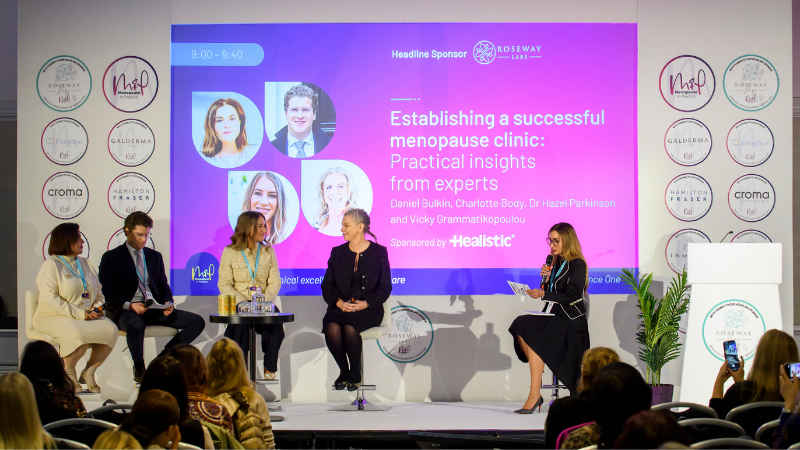
The Future of Women’s Health: Why These Two Landmark London Congresses Matter to Women Everywhere.
This February in London, two powerful healthcare gatherings quietly signalled something significant: women’s health is no longer a side conversation – it is moving to the centre of medicine.
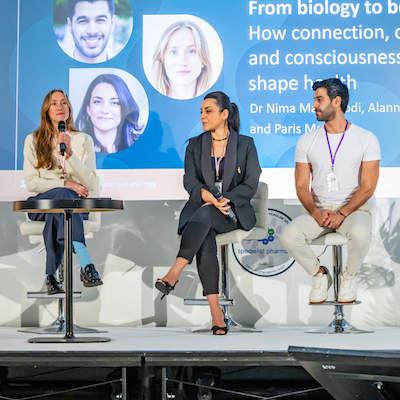
The inaugural Future Patient Congress and the ever-growing Menopause in Practice 2026, both held at the Grand Connaught Rooms, brought together clinicians, educators and innovators who are reshaping how we think about prevention, longevity and personalised care.
While these events are primarily designed for healthcare professionals, their impact reaches far beyond clinic walls. For women – whether navigating perimenopause, managing complex hormonal shifts, supporting ageing parents, or simply wanting to feel proactive about their health – these conversations matter deeply.
Moving Beyond “Wait Until It’s a Problem”
A clear thread ran through both congresses: a shift away from reactive, symptom-led care towards prevention, root-cause investigation and whole-person health.
At Future Patient Congress, experts explored longevity science, gut health, nervous system regulation, mitochondrial health and food as medicine. The message was clear: healthcare is evolving towards earlier intervention and more personalised pathways.
For women, who are often dismissed or told symptoms are “normal for your age,” this is profoundly important. It signals a growing medical appetite to listen, to investigate and to treat the whole person – not just prescribe and move on.

Menopause Care Is Growing Up
Meanwhile, Menopause in Practice 2026, run by mBody Media, demonstrated just how far menopause education has come.
The agenda moved well beyond hot flushes and HRT basics. Delegates explored neurological symptoms, eye health, weight management, cancer-related menopause care and integrative lifestyle medicine. The breakout sessions on prescribing and aesthetics reflected the reality that menopause care today must be nuanced, evidence-led and individualised.
For women, this means that the professionals attending these events are going back into practice better informed, more confident and more collaborative. It means your GP, pharmacist, nurse or specialist may now be thinking more holistically about your hormones, sleep, mood, metabolism and long-term health risks.
Why This Is Good News for Women
Even if you never attend a CPD-accredited congress yourself, you benefit when your clinician does.
Both events highlighted:
- A move towards personalised, patient-centred care
- Greater collaboration between disciplines
- Recognition of the complexity of women’s hormonal health
- Increased focus on prevention and healthy ageing
- An openness to lifestyle and integrative approaches alongside conventional medicine

Importantly, there was also a strong sense of community – professionals asking, “What’s next?” and how they can continue to learn. That appetite for ongoing education ultimately translates into better care.
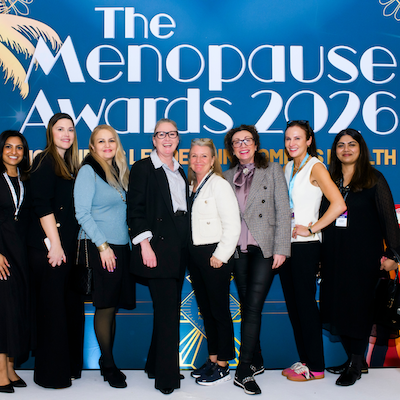
A Cultural Shift in Women’s Health
What feels different now is momentum. These are not fringe discussions. They are mainstream, credible and growing year on year.
The menopause conversation, once whispered, is now supported by robust education and multidisciplinary expertise. Preventative medicine is no longer an abstract concept but an actionable framework. And personalised care is moving from aspiration to expectation.
For readers of Women Talking, this matters because it reflects a wider cultural shift: women are demanding better, and the healthcare community is responding.
As plans are already underway for both Future Patient Congress 2027 and Menopause in Practice 2027, one thing is clear – the future of healthcare is more collaborative, more preventative and more focused on the lived experience of women.
And that can only be good news for us all.
Poppy Watt